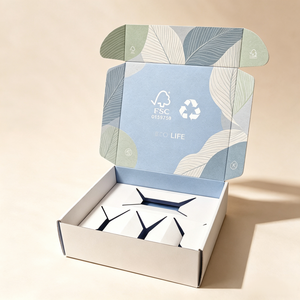
Factory Direct Catalog
High-Precision Lens Formulations & Packaging Systems
Manufactured under strict ISO 13485 cleanroom protocols. Providing diopter-calibrated cosmetic lenses, specialty optics, and custom packaging for optical retailers across Vienna, Graz, Linz, and Salzburg.
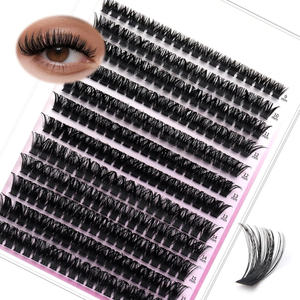
Nasar Green 3-Tone Small Pupil Soft Yearly Lenses
Product Details →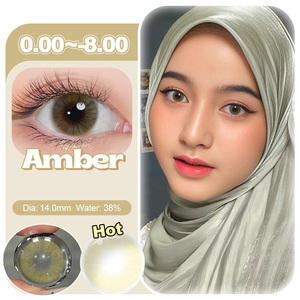
Magister Hidrocor Natural Prescription Color Lenses
Product Details →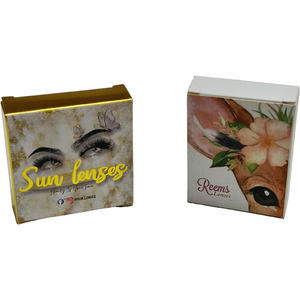
Luxury Gold Foil Custom Cardboard Folding Box
Product Details →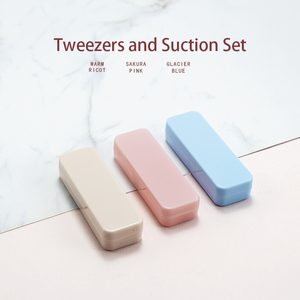
Direct Candy-Coloured Hygienic Contact Lens Applicator Stick
Product Details →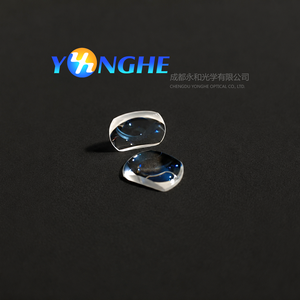
Customized Special-Shaped Cutting Optical Lenses
Product Details →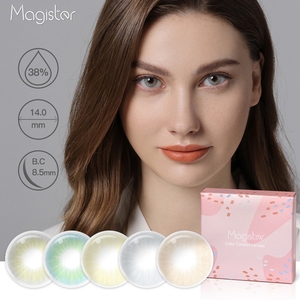
Magister Queen Most Natural Iris Pattern Lenses
Product Details →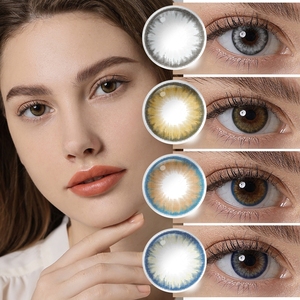
OEM Customized Package Dahab Soft Colored Contacts
Product Details →10+ Years
Ophthalmic Mold Engineering
100%
Sandwich Encapsulation Safety
±0.20 mm
Base Curve Fidelity (8.5 - 8.7)
MDR 2017/745
CE Class IIa Technical Dossiers
Clinical Optics & Material Science
Engineering Prescription Color Contacts for the Austrian Biome
Technical considerations for distributing corrective cosmetic lenses across Central Europe, addressing low Alpine winter humidity, UV reflection, and strict ophthalmic dispensing standards.
Alpine Humidity Stabilization
Austrian winters in regions like Tyrol, Vorarlberg, and Carinthia present harsh ambient conditions: outdoor freezing temperatures coupled with high-temperature indoor radiator heating. Traditional high-water content hydrogels frequently cause end-of-day dryness by extracting tear film from the cornea. Our proprietary poly-HEMA and Silicone-Hydrogel formulations lock water molecules within an ionic-resistant matrix, maintaining stable hydration without stripping natural pre-corneal tear film.
Broad-Spectrum Class II UV Blocking
Given Austria's topography—where outdoor enthusiasts, ski instructors, and Alpine lifestyle consumers encounter amplified UV radiation reflected off snowfields—corrective colored lenses must offer optical protection. Chroma Lens integrates class-specific benzotriazole UV blockers during monomer casting, absorbing over 85% UVA and 98% UVB radiation to safeguard the corneal limbus and internal intraocular structures from photokeratitis.
Zero-Pigment Contact (Sandwich Technology)
European ophthalmological safety guidelines rigorously prohibit organic pigments from contacting human conjunctival or corneal tissues. We employ multi-layer micro-encapsulation: biocompatible mineral pigments (iron oxides, phthalocyanine, titanium dioxide) are printed into an internal reservoir, hermetically enclosed between two micro-thin layers of clear polymer. This eliminates surface roughness, prevents pigment leaching, and facilitates unhindered bacterial defense.
Factory Standards
OEM Manufacturing Parameters for Austrian Optometrists
Comprehensive manufacturing tolerances exceeding DIN EN ISO 14534 standards for soft contact lenses.
| Optic Parameter | Standard Specification | Austrian & EU Market Optimization | Quality Verification Method |
|---|---|---|---|
| Base Curve (BC) | 8.50 mm to 8.70 mm (±0.02 mm) | Tailored for Caucasian corneal sagittal depth to eliminate lens decentration. | Rotational Projection Spherometer |
| Diameter (DIA) | 14.0 mm to 14.5 mm (±0.10 mm) | 14.2 mm optimal standard; maintains physiological limbal tear exchange. | Non-contact Optical Video Gauge |
| Spherical Power Range | 0.00D (Plano) to -10.00D / +4.00D | -0.50D to -6.00D in 0.25D steps; -6.00D to -10.00D in 0.50D increments. | Digital Auto-Focimeter Calibration |
| Water Content | 38% – 42% (Low water / Poly-HEMA) | Prevents lens dehydration in dry alpine & conditioned air environments. | Gravimetric Drying & Refractive Index |
| Center Thickness (CT) | 0.07 mm to 0.08 mm @ -3.00D | Ultra-thin profile maximizes oxygen transmissibility (Dk/t: ~20-28 × 10-9). | Electronic Contact Thickness Gauge |
| Optical Pupil Clearance | Clear central aperture ∅ 4.8 mm – 5.5 mm | Prevents tunnel vision during scotopic pupil dilation (night driving in Alpine regions). | Polarized Reticle Transmitted Light |
| Wear Modality | Daily Disposable / Monthly / Yearly (Soft) | 1-Day Blisters & Monthly packages compliant with Austrian pharmacy chains. | Accelerated Stability & Sterility Testing |
Market Intent & Localization
Austrian Application Scenarios: Retail, Clinical & Subcultural Demand
How corrective color contact lenses penetrate independent Austrian optical practices (Augenoptiker), beauty platforms, and seasonal subcultures.
Clinical Optical Salons (Augenoptikermeister)
In Austria, eye health is managed primarily through certified Master Opticians (Augenoptikermeister) and ophthalmologists (Fachärzte für Augenheilkunde). Patients with mild refractive errors (myopia) frequently seek natural iris enhancement without sacrificing visual acuity. Our Magister Hidrocor and Dahab collections provide subtle tonal blending that enhances light green, grey, and blue Caucasian irises naturally, giving opticians high-margin cosmetic solutions that meet client expectations for refined aesthetics.
The Viennese Ball Season & Gala Glamour
From the Vienna Opera Ball (Wiener Opernball) to the Hofburg gala events, winter in Austria is defined by classic elegance. During this period, beauty salons, premium cosmetic boutiques, and retail opticians experience elevated demand for temporary eye color transformations. Consumers look for hazel, golden honey, and sapphire hues that photograph flawlessly under ballroom chandeliers without creating artificial-looking iris rings or pupil disorientation.
Alpine Carnival (Fasching) & VIECC Gaming Conventions
Between Austrian carnival traditions (Fasching) in Villach and modern cosplay events like Vienna Comic Con (VIECC), there is year-round demand for high-opacity theatrical and anime contact lenses. Crucially, Austrian consumers demand prescription diopters in costume contacts—a feature overlooked by generic suppliers. Chroma Lens supplies vivid anime reds, whiteout meshes, and cat-eye styles corrected up to -8.00D, ensuring safe wear without compromising visual clarity.
Compliance Whitepaper
Meeting BASG, AGES & EU MDR 2017/745 Standards
A comprehensive overview for importers and distributors navigating Austrian medical device laws (Medizinproduktegesetz 2021 - MPG 2021).
Classification Under MDR
Under EU Medical Device Regulation (EU) 2017/745, Annex VIII Rule 5, corrective contact lenses are classified as Class IIa medical devices. Cosmetic lenses with zero power (plano) fall under Annex XVI (devices without an intended medical purpose), requiring identical stringent clinical evaluation, biocompatibility testing, and Notified Body oversight.
BASG Regulatory Oversight
The Austrian Federal Office for Safety in Health Care (Bundesamt für Sicherheit im Gesundheitswesen - BASG) executes market surveillance. Products imported via Chroma Lens factory OEM include complete technical documentation: ISO 10993 cytotoxicity, ocular irritation tests, and physicochemical stability testing.
German IFU & UDI Traceability
Austrian national legislation requires that all professional and end-user documentation (Gebrauchsanweisung / IFU) be provided in German. Chroma Lens delivers localized label printing featuring DIN EN ISO 15223-1 medical symbols, batch identifiers, expiry validation, and Unique Device Identification (UDI-DI / UDI-PI).
Austrian Packaging Register (ARA)
Compliance with the Austrian Packaging Ordinance (Verpackungsverordnung) requires licensed recovery quotas. Our custom cardboard boxes (magnetic paper gift packaging, gold foil luxury cartons) use recyclable virgin pulp and eco-friendly printing inks, aiding compliance with local Altstoff Recycling Austria (ARA) targets.
Factory Competency
Why Austrian Brands Partner With Chroma Lens Technology
Integrated in-house mold engineering, proprietary dye synthesis, and direct factory-to-business supply chain velocity.
In-House Tooling & Mold Development
Unlike assembly plants that outsource casting cups, we design, cut, and polish our own optical molds utilizing nanoscale diamond-turning lathes. This allows Austrian clients to order bespoke base curve modifications (e.g., 8.6 mm for European eye profiles), unique edge geometries for improved tear circulation, and rapid prototypes within 14 business days.
Proprietary Safe Ink Formulation
Our cleanroom laboratory synthesizes ophthalmic-grade printing inks with consistent particle size (< 0.5 μm). This ensures that color gradations remain vivid without clustering, creating smooth, natural transitions from the limbal ring to the pupillary border that complement light-colored European eyes.
Custom Private Label Packaging Systems
From initial design concepts to retail-ready blister strips, magnetic presentation boxes, and branded accessory kits (hygienic insertion sticks and tweezers), we offer end-to-end turnkey branding. We support Austrian startups, pharmacy distributors, and optical retail chains with low-MOQ sample runs and scalable mass production.
Purchasing & Regulatory Q&A
Frequently Asked Questions for Austrian Optical Buyers
Key information regarding ordering, shipping, customs clearances, and medical compliance for the DACH territory.
How are customs clearance and import duties handled for shipments into Austria?
Shipments entering Austria (via Vienna-Schwechat Airport or logistics hubs in Linz and Graz) clear customs under HS Code 9001.30 (Contact Lenses). As the manufacturer, Chroma Lens supplies commercial invoices, packing lists with net/gross weights, certificates of origin, and complete technical declarations. Importers must hold an EORI number and declare Austrian Import VAT (Einfuhrumsatzsteuer - EUSt), which is typically 20% unless exempt through local tax deferment accounts.
Can you provide German-language packaging and instructions for use (IFU)?
Yes. In full compliance with Austrian medical device legislation (MPG 2021) and EU MDR Chapter III Article 10, we print secondary cartons and fold internal package leaflets completely in idiomatic German. Our documentation includes mandatory safety warnings, wear schedule guidelines, care and disinfection instructions, and standard DIN EN ISO 15223-1 symbols.
What is the minimum order quantity (MOQ) for custom private label collections?
For catalog styles (e.g., Magister Hidrocor, Nasar Green, Queen series) with custom exterior brand stickers, our MOQ starts at 50 to 100 pairs per diopter power. For full OEM runs featuring bespoke magnetic boxes, unique iris pattern printing, custom blister foils, and personalized base curves, our typical MOQ is 500 to 1,000 pairs per SKU, facilitating manageable inventory planning for regional Austrian brands.
How does your factory verify power accuracy across large diopter ranges?
Every prescription production batch undergoes optical verification on computerized focimeters calibrated to European refractive index standards (1.437–1.442 hydrated). Powers ranging from -0.50D to -10.00D are tested for spherical equivalence, back vertex power accuracy, and prism imbalance to verify that the patient experiences comfortable, accurate visual correction.
Are cosmetic plano (0.00D) lenses regulated identically to prescription lenses in Austria?
Yes. Under EU MDR 2017/745 Annex XVI, non-corrective (plano) cosmetic contact lenses must satisfy the same technical, clinical safety, biological compatibility, and quality management requirements as prescription lenses. Chroma Lens applies identical class IIa manufacturing controls across both plano and prescription inventories.
What is the shelf life and packaging stability of your sealed contact lenses?
Our lenses are sealed in sterile buffered saline within medical-grade polypropylene blister packs or glass vials and steam-autoclave sterilized at 121°C. Our accelerated stability data confirms a sterile, shelf-stable lifespan of 5 years from the date of manufacture, allowing distributors to manage supply chains without risk of premature expiration.
Expand Your Contact Lens Portfolio in Austria
Partner with an established manufacturer offering in-house mold engineering, proprietary color inks, and comprehensive EU regulatory documentation. Request samples, trial batches, or a customized private label quotation today.
Get a Quote