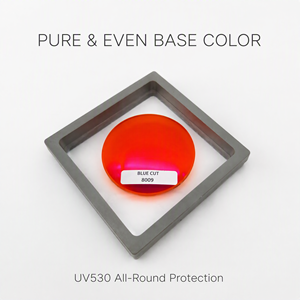
10+ Years
Precision Casting Experience
100% In-House
Molds & Biocompatible Inks
ISO 13485
GMP Medical Device Compliance
180 Days
Balanced Hydration Cycle
Export-Grade Catalog
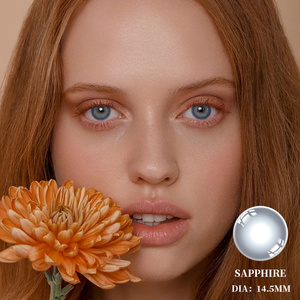
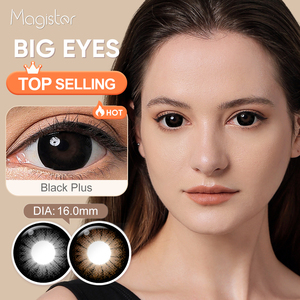
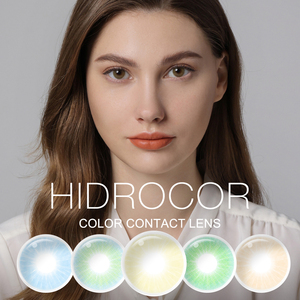
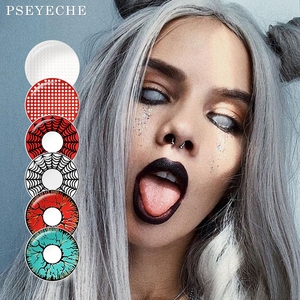
Featured Semi-Annual & Cosmetic Contact Lenses
Engineered with micro-encapsulated sandwich pigment technology, high oxygen permeability (Dk), and ultra-smooth edge matrices tailored for both cosmetic enhancement and clinical vision correction.
Enterprise Advantages
Why Major Optical Importers Rely on Chroma Lens
Unlike intermediary trading companies, Chroma Lens operates an integrated synthesis, molding, and coloring plant that standardizes production from raw monomer chemistry to final blister sealing.
In-House Mold Tooling
We engineer precision steel micro-molds on sub-micron CNC lathes, directly guaranteeing base curve (BC) stability and preventing astigmatic aberration across extended wearing cycles.
Proprietary Biocompatible Inks
Our laboratory synthesizes medical-grade non-ionic organic color pigments formulated to remain securely sealed within the polymer matrix, eliminating leaching and corneal abrasion risks.
Original Iris Pattern Vault
Offering over 300+ customized textures—from authentic Latin-American hazel and honey blends to dramatic cosplay gradients—protecting your private label brand from generic market clones.
Controlled Quality (GMP)
Full batch traceability from monomer polymerization to autoclaved saline sterilization, supported by complete documentation dossiers for seamless health authority clearance.
Technical Whitepaper
Engineering Six-Month Hydrogel Optics for the Peruvian Climate & Demographics
An authoritative breakdown of ocular surface residence, polymer degradation profiles, and consumer adoption drivers throughout Peru's distinctive coastal, Andean, and urban environments.
In the international contact lens landscape, the six-month replacement modality (lentes de contacto semestrales) occupies an optimal commercial nexus between monthly disposables and traditional annual hydrogels. For optical distributors and retail chains operating in the Republic of Peru, six-month colored lenses deliver maximum cost-per-wear efficiency for the end consumer while safeguarding ocular tissue integrity far better than aging yearly lenses. Understanding the physical chemistry, environmental stressors, and ocular morphology unique to the Peruvian consumer base is vital for professional optical buyers.
1. Ocular Morphology and Chromatic Melanin Densities in the Peruvian Population
The vast majority of the Peruvian demographic across coastal metropolises such as Lima and Callao, northern hubs like Trujillo and Chiclayo, and Andean centers including Arequipa and Cusco possess deep dark-brown to black iris phenotypes (Grade IV and V on the MacCallan-Seddon Iris Scale). Standard European translucent tinted lenses generally fail on dark irises, producing muddy or barely discernible color transitions.
To achieve realistic and striking color shifts—such as warm amber, hazelnut, crystalline green, and ice blue—Chroma Lens utilizes proprietary Triple-Layer Sandwich Micro-Dot Matrix Printing. In this construction, the pigment is completely locked inside a hydrogel envelope:
- Base Structural Layer: Biocompatible 2-HEMA (Hydroxyethyl methacrylate) that rests comfortably against the corneal epithelium with a 0.08mm center profile.
- Reflective Core Pigment Layer: High-opacity, bio-inert mineral pigment combined with fine micro-dots that diffuse incoming ambient light and obscure the natural dark stroma underneath.
- Cap Hydrogel Seal: An ultra-smooth polymer coating exposed to the tarsal conjunctiva that prevents pigment migration, decreases bacterial biofilm adhesion, and ensures tear-film renewal with every blink.
2. Biocompatibility Under Extreme Climate Variance: From Lima Humid Fog to Andean Altitudes
Peru exhibits extraordinary geographic and environmental heterogeneity that places demanding requirements on contact lens water retention, tear evaporation, and oxygen transmissibility:
Lima Coastal Microclimate
Lima’s coastal atmospheric profile exhibits high humidity paired with heavy airborne particulate matter and automotive micro-smog. Chroma Lens utilizes non-ionic Poly-HEMA polymers with an optimized 38% to 42% water content. This formulation resists electrostatic protein deposition and lipid buildup, ensuring lenses stay lubricated and debris-resistant over the entire 180-day cycle.
Andean Hypobaric Environments
In highland cities like Arequipa (2,325m) and Cusco (3,400m), low atmospheric pressure and thin air accelerate tear film break-up time (TBUT). High water-content lenses (58%+) tend to dehydrate rapidly by drawing water from the wearer's cornea. Our medium-water formulation balances hydration retention with stable oxygen flow, minimizing dry-eye complaints common in mountainous zones.
Cosmetic & Cosplay Subcultures
In vibrant urban districts like Miraflores, San Isidro, and Los Olivos, youth fashion, social media streaming, and cosplay gatherings (e.g., Lima Geek Festival) drive strong demand for both natural beauty enhancement (14.2mm–14.5mm) and theatrical/anime transformations (15.0mm–16.0mm enlargement patterns).
3. Technical Specifications Comparison: 6-Month vs. Alternative Cycles
When selecting your inventory strategy for Peru, evaluate how the six-month modality compares structurally against monthly and traditional annual options:
| Parameter Attribute | Daily / Monthly Disposable | Chroma Lens 6-Month (Semestral) | Conventional Yearly (Anual) |
|---|---|---|---|
| Material Matrix | Ionic Hydrogel / SiHy | Premium Non-Ionic Poly-HEMA | Standard Crosslinked Polymacon |
| Water Content (H2O %) | 55% – 58% (High Evaporation) | 38% – 42% (Optimal Stability) | 38% (Rigid Polymer Network) |
| Base Curve (BC) / Diameter | 8.5mm / 14.2mm | 8.6mm / 14.0mm – 14.5mm | 8.6mm / 14.5mm |
| Corneal Pigment Contact | Surface Pad Printing (Leach risk) | Encapsulated Sandwich Casting | Sandwich or Lathe Cut |
| Protein Deposition Resistance | Low (Disposed before buildup) | High (Smooth non-ionic finish) | Moderate (Prone to year-end haze) |
| Cost per Patient / Margin | High consumer cost / Low margin | Affordable wear / Highest ROI | Low repeat frequency |
4. Regulatory Compliance & Importation Pathways for Peru (DIGEMID)
In Peru, corrective and cosmetic colored contact lenses are classified as Medical Devices (Dispositivos Médicos - Clase II) under the oversight of DIGEMID (Dirección General de Medicamentos, Insumos y Drogas). Local optical importers, wholesalers, and clinical laboratories must hold a valid Registro Sanitario to clear customs through the Port of Callao or Jorge Chávez International Airport.
Chroma Lens facilitates regulatory clearance by providing complete, pre-audited technical dossiers, including:
- ISO 13485:2016 Certification covering precision casting, sterile packaging, and quality management systems for ocular devices.
- Certificate of Free Sale (CFS / CLV) duly apostilled to meet Peruvian consular and commercial guidelines.
- Biocompatibility Dossier demonstrating complete non-cytotoxicity (ISO 10993-5), non-irritation in ocular testing (ISO 10993-10), and zero trace pigment elution during prolonged contact with multi-purpose saline solutions.
- Bilingual Spanish/English Labeling & IFU (Instrucciones de Uso) with standardized iconography compliant with local consumer protection regulations (INDECOPI).
Procurement FAQ
Frequently Asked Questions by Peruvian Optical Buyers
Clear guidance on commercial minimums, custom branding, logistics to Peru, and technical regulatory support.
What are the minimum order quantities (MOQ) for custom OEM branding in Peru?
For factory-stocked designs and catalog colorways, our minimum order quantity starts at just 50 to 100 pairs, accommodating boutique optical shops in Lima or regional cities. For customized private label branding—including custom blister packaging, box printing in Spanish, and proprietary pattern shades—our MOQ is typically 500 to 1,000 pairs across flexible power and color distributions.
Does Chroma Lens provide documentation required for DIGEMID sanitary registration?
Yes. We regularly supply our Peruvian importing partners with comprehensive technical files (Dossier Técnico), ISO 13485:2016 certificates, Certificates of Analysis (CoA) per lot, accelerated stability study data verifying the 5-year unopened shelf-life, and apostilled documentation essential for obtaining your Registro Sanitario with DIGEMID.
Can I combine cosmetic plano (0.00) lenses with prescription diopters for myopia?
Absolutely. Our automated casting lines support both plano (0.00 diopter) cosmetic lenses and prescription powers from -0.50D to -8.00D (in 0.25D increments up to -6.00D, and 0.50D steps from -6.00D to -8.00D). This lets optical practices serve cosmetic and refractive patients from the same inventory.
How do six-month lenses compare in comfort to monthly or yearly options?
Six-month lenses use balanced 38%-42% Poly-HEMA hydrogel, which avoids the progressive surface dehydration typical of high-water monthly lenses in dry air, as well as the heavy protein build-up that often troubles 1-year lenses toward month 9 or 10. For the Peruvian market, this modality offers a clean balance of safety, clear vision, and affordable cost.
What shipping routes and transit times apply for freight delivered to Callao or Lima?
For express cargo and smaller sampling orders, we utilize air courier services (DHL/FedEx/UPS), delivering directly to Jorge Chávez International Airport (LIM) in approximately 5 to 8 business days. For consolidated container volume, sea freight sails directly to the Port of Callao, with transit times averaging 28 to 35 days depending on shipping line schedules.
How can we verify that the pigments will not leach onto the patient’s eye?
Every batch of Chroma Lens cosmetic contacts is manufactured using sandwich micro-encapsulation. The pigment sits securely within hydrogel layers and never contacts the cornea or palpebral conjunctiva directly. We provide laboratory rub tests, solvent extraction analyses, and ISO biocompatibility reports confirming zero pigment exposure.
Expand Your Optical Portfolio with Factory-Direct Pricing
Partner with Chroma Lens to supply premium six-month colored contact lenses throughout Peru. Receive tailored samples, private label packaging mockups, and wholesale FOB/CIF price lists within 24 hours.