Automation
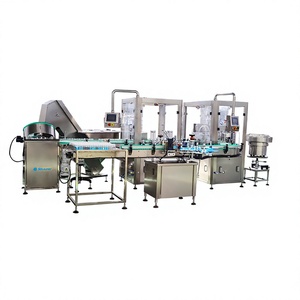
Engineered for high water stability, micro-pigment safety, and natural visual expansion matching Tokyo's beauty market standards.
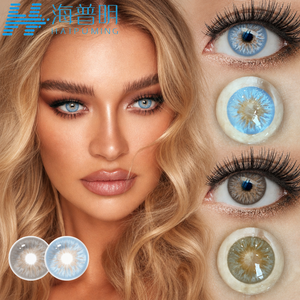
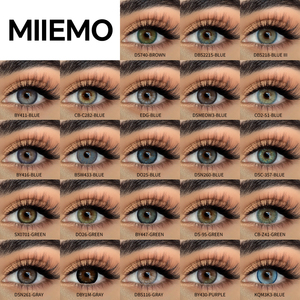
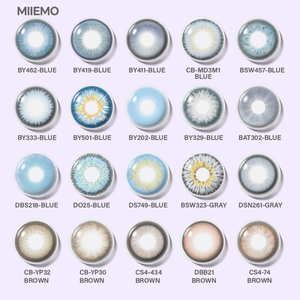
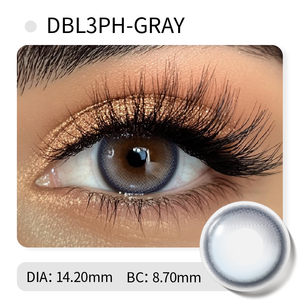
In Tokyo's competitive beauty and contact lens hubs—such as Harajuku, Shinjuku, and Ginza—consumer demand has fundamentally migrated from exaggerated, wide-limbal circle lenses to "Churun" (ちゅるん) translucent naturalism. Honey brown is the undisputed cornerstone shade for East Asian irises, requiring delicate gradient micro-dotting that blends seamlessly with dark brown ocular tissue while refracting amber, caramel, and warm hazel highlights.
For corporate buyers, pharmacy distributors, and Don Quijote retailers across the Greater Tokyo Area, stocking honey brown is an intricate balance between cosmetic radiance and rigorous health ministry compliance. Achieving true natural eye enlargement demands precise Graphic Diameter (GDIA) calibration between 13.0mm and 13.5mm, maintaining a comfortable 8.6mm base curve that mitigates corneal pinching during extended commutes across Tokyo's subway networks.

A rigorous comparative analysis based on manufacturing methodology, encapsulation safety, Japanese PMDA alignment, and minimum order flexibility.
| Manufacturer Profile | Manufacturing Technique | Sandwich Encapsulation | Target Replacement | Regulatory Readiness | Tokyo Lead Times |
|---|---|---|---|---|---|
| Chroma Lens Technology Co., Ltd. | Cast Molding + In-House Nano-Inks | Full Polymer Seal | Daily / Monthly / 6-Month | PMDA Ready, ISO 13485, CE | Fast Air Cargo (7–12 Days) |
| Seed Co., Ltd. (Japan Domestic) | Cast Molding Hydrogel | Embedded Color Layer | Daily / 2-Week | PMDA Certified (Class III) | Domestic Hub (1–2 Days) |
| Pegavision Corporation (Taiwan Hub) | Automated Cast Injection | Encapsulated Dotting | Daily Disposable | PMDA Registered / ISO 13485 | Direct Air (5–9 Days) |
| Ginko International (Hydron) | High-Speed Wet Cast | Standard Micro-Coating | Daily / Monthly | PMDA Cleared Brands | Regional Cargo (8–14 Days) |
| Innovate Optical Japan | Precision Lathe-Cut & Cast | Internal Seal Barrier | Monthly | PMDA Class III License | Domestic Hub (2–3 Days) |
| Neo Vision Co., Ltd. | Sandwich Cast Technology | Dual-Surface Polymer | 1-Year / Monthly | ISO 13485, CE, PMDA Partner | Korea-Tokyo Air (4–7 Days) |
| GEO Medical Laboratory | Dual-Layer Cast System | Dual-Side Protection | Quarterly / Annual | KFDA / ISO / CE / Japan OEM | Regional Forwarding (6–10 Days) |
| St. Shine Optical Co. | High-Throughput Molding | Direct Polymeric Trap | Daily / Bi-Weekly | PMDA Direct Audit Passed | Express Consolidation (6–8 Days) |
| Visco Technology Global | Automated Polymerization | Edge-Bound Pigmentation | Monthly / 6-Month | ISO 13485, Export Certs | Cross-Border Freight (10–15 Days) |
| Dueba Contact Lens Lab | Semi-Cast Mold System | Full Interlayer Shield | Half-Year / Annual | CE, ISO 13485 Compliance | Air Courier (7–11 Days) |
Owning every critical node in the manufacturing chain from mold tooling to bio-compatible pigment stabilization.
Unlike assembly-only competitors relying on generic third-party blanks, our facility develops custom high-precision tooling internally. This ensures an exact 8.6mm base curve and tapered edge profiles that eliminate ocular friction for Asian corneal shapes.
Formulated in our internal optic laboratories, our cosmetic pigments exhibit extreme thermal stability during autoclave sterilization. High pigment-density guarantees distinct honey brown gradients without bleeding into the clear optical aperture.
Our dedicated design bureau drafts seasonal, runway-inspired iris patterns. Featuring micro-feathered limbal borders and honey-hazel radial bursts, our catalog enables Japanese brand owners to launch high-conversion SKUs with zero design lag.
Our specialized cast-molding encapsulation process embeds colorants between two micro-thin layers of poly-HEMA material. Pigment never contacts the sensitive corneal epithelium, completely preventing toxic leaching and friction conjunctivitis.
We supply complete technical documentation packages, biological evaluation reports (ISO 10993), stability data, and bilingual English-Japanese packaging compliance sheets to accelerate Japanese regulatory registrations.
From boutique Shibuya cosmetics start-ups seeking low MOQs to nationwide optical retail chains requiring high-speed automated blister packaging lines, our production infrastructure delivers reliable, uninterrupted supply cycles.
Mapping honey brown color dynamics to specific Japanese lifestyle environments and purchasing channels.
In corporate financial districts like Marunouchi and Otemachi, conservative business etiquette requires undetectable eye enhancement. Our 13.2mm GDIA Honey Brown delivers a soft amber glow under fluorescent lighting without appearing artificial, making it an essential everyday staple.
Young Japanese trendsetters combine honey brown contacts with warm peach and coral "Igari" eye makeup. Higher-translucency 3-tone honey pigments offer reflective, dewy depth under smartphone camera flashes, driving viral social media engagement across Tokyo beauty creators.
In Akihabara and Ikebukuro anime subculture districts, honey brown functions as an everyday alternative to intense theatrical contacts. It naturally flatters blond, light brown, and pastel character wigs without looking disconnected from natural facial features.
Critical operational answers for commercial import managers, optical distributors, and e-commerce brand buyers.
Direct factory pricing, complete PMDA compliance support, rapid prototyping, and proprietary color encapsulation technology. Request your customized honey brown sample kit today.