Certified High-Impact Cosplay Contact Lens Formulations
Engineered with patented color entrapment matrices and ultra-permeable hydrogel structures designed for Japanese anime conventions, theater productions, and character role-play.
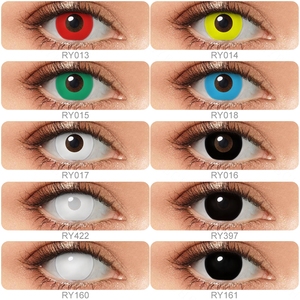
Free Shipping Pseyeche Halloween Contacts Crazy Sharingan Eye Lens Anime Cosplay Contact Lenses Eye Lens Lentes De Contacto
View Product Specs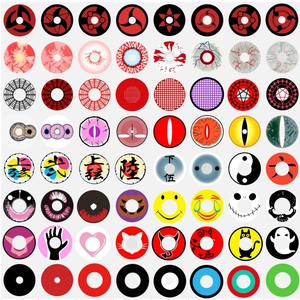
Free Shipping Items Pseyeche Halloween Contacts Crazy Sharingan Eye Lens Anime Cosplay Contact Lenses Lentes De Contacto
View Product Specs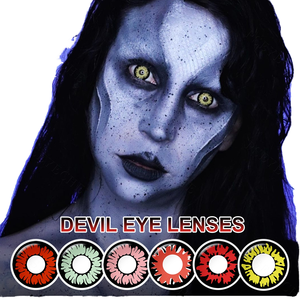
Hot Seller PSEYECHE Halloween Contact Lenses Crazy Sharingan Cosplay Soft Colored Contacts for Cosplay and Festivals
View Product Specs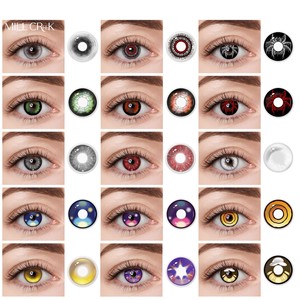
Haipurecon Halloween Cosplay High Quality Soft Crazy Contact Lenses 14.5mm Three Tone 0.08mm Thick Big Eyes Makeup Wholesale
View Product Specs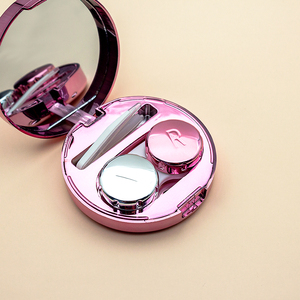
Lalens Cyber Grey Eyes For Dolls Anime Lens Wholesale Coloured Contacts Lentes De Contacto Contact Lens Wholesale
View Product Specs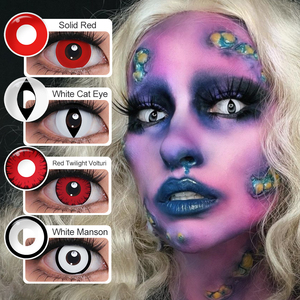
Free Shipping Magister Halloween Lens Crazy Anime Eye Contacts Big Eye Soft Annual Cosplay Contact Lenses Lentille Sharingan
View Product Specs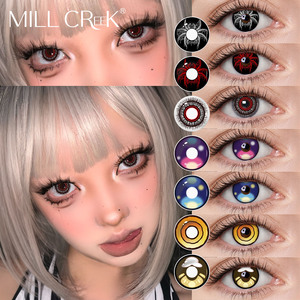
Haipurecon Halloween Cosplay High Quality Soft Crazy Contact Lenses 14.5mm Three Tone Big Eyes Makeup Wholesale
View Product Specs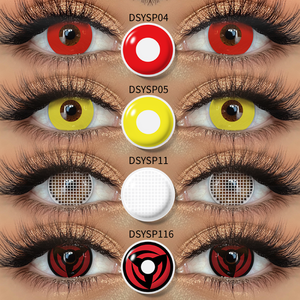
Factory - Supplied Crazy Colored Contact Lenses for Unforgettable Cosplay and Halloween
View Product SpecsStrategic Cosplay Optics Sourcing: Bridging China Manufacturing with the Japanese Market
The Japanese cosmetic and theatrical contact lens ecosystem represents the most stringent regulatory standard and the most design-sophisticated consumer base in the world. As the birthplace of ACG (Anime, Comic, and Games) culture, Japan demands cosplay colored contact lenses with maximum color saturation, absolute corneal positioning stability, and total physiological safety. For Japanese enterprise distributors, Harajuku fashion brands, and Tokyo specialty optics retailers, partnering directly with a top-tier Chinese manufacturing facility is no longer simply about cost efficiency—it is an engineering prerequisite to secure high-precision tooling, rapid prototyping, and scalable OEM stability.
At Chroma Lens Technology Co., Ltd. (operating advanced cleanroom manufacturing facilities in Yongji Economic Development Zone, Jilin), we provide end-to-end original design manufacturing (ODM) that satisfies Japan PMDA (Pharmaceuticals and Medical Devices Agency) baseline criteria. Unlike trade intermediaries who outsource production stages to disparate sub-vendors, our full-stack factory owns every critical node: in-house mold tooling, biocompatible color ink synthesis, automated cast molding, and three-layer encapsulated pigment containment.
The Technical Engineering Advantage: Sandwich Encapsulation Technology
Standard cosmetic contacts often raise safety concerns regarding micro-pigment elution and corneal epithelial erosion. In high-opacity cosplay lenses—where white out, Sharingan, vibrant crimson, and neon cyber tones require double the pigment volume of ordinary beauty lenses—color isolation is vital.
Our automated production lines utilize proprietary Three-Layer Sandwich Encapsulation. Raw medical-grade PolyHema polymer is cast as a base barrier, followed by precision pad-printing using our proprietary micro-dispersed bio-inks. A second protective polymer layer is cast and polymerized over the pigment matrix, completely embedding the graphic layer between two inert hydrogel shields. This ensures zero pigment contact with ocular surfaces or palpebral conjunctiva while preserving a high Dk/t oxygen transmissibility rate and silky 0.08mm profile.
| Optical Metric | Chroma Lens Japan Export Standard | Generic Wholesale Factory Lenses | Cosplay Clinical Relevance |
|---|---|---|---|
| Pigment Isolation | Double-layer Polymer Sandwich Encapsulation | Surface Coated / Monolayer Print | Eliminates keratitis risks and dye leakage during 8-hour wear. |
| Base Curve (B.C.) Precision | 8.50mm – 8.60mm (±0.02mm tolerance) | 8.60mm standard (±0.08mm deviation) | Prevents decentration and lens lag under convention strobe lights. |
| Graphic Diameter (GDIA) | 13.8mm to 14.2mm (Total DIA 14.5mm) | Fixed 13.5mm generic circles | Provides the exaggerated "2D doll-eye" aesthetic without limbal pinching. |
| Water Retention Index | 38% – 40% Low-Water PolyHema | >55% High Water (Prone to evaporation) | Low-water hydrogel does not draw moisture from tear films in ACG convention venues. |
| Center Thickness | 0.08mm Ultra-Thin Precision Rim | 0.12mm – 0.15mm Heavy Edge | Decreases foreign body sensation while retaining structural dome rigidity. |
Localized Application Scenarios Across the Japanese Cosplay Landscape
The application spectrum for cosplay contact lenses across Japan extends far beyond occasional Halloween novelties. Sourcing partners must address diverse specialized subcultures across major urban centers:
Major ACG Summits & Conventions
At Tokyo Comic Market (Comiket), World Cosplay Summit (Nagoya), and AnimeJapan, cosplayers require true-to-source ocular reproduction. Dark Asian irises require ultra-opaque micro-dot layering to completely mask natural brown/black tones with stark reds, purples, and geometric ocular sigils.
2.5D Theatrical Plays & VTuber Live Acts
Stage adaptations of manga properties (2.5-Dimensional Musical stagecraft) in Shinjuku and Shibuya necessitate contact lenses that reflect ambient stage lights without flaring, providing actors with 120-degree clear peripheral vision without pupil obstruction.
Seasonal Retail & Don Quijote Channels
From the Shibuya Halloween block party to year-round visual-kei (V-Kei) fashion boutiques in Harajuku, retail channels require sterile blister multipacks with clear Japanese drug safety warnings, verified lot codes, and stable 5-year shelf-life durability.
Market Trends: Evolution of the Japanese Theatrical Eyewear Industry
Analysis of purchasing data indicates three substantial shifts in the Japanese colored lens sector:
1. Demand for High-Definition "Anime Sparkle" Micro-Patterns: The market has transitioned away from flat, opaque color fills toward complex multi-tone iris gradients. Cosplayers seek layered graphic rings with high edge feathering that emulate hand-drawn illustration lighting effects under professional DSLR studio flash photography.
2. Rapid Expansion of Prescription (Myopia) Cosplay Contacts: Over 68% of Japanese anime fans require refractive vision correction. Generic factories usually offer cosmetic cosplay lenses exclusively in Plano (0.00 diopter). Chroma Lens provides custom power conversion from -1.00 to -8.00 diopters across our entire theatrical and Sharingan catalog, unlocking broader retail conversion rates for local distributors.
3. Accelerated Private Label (ODM) Turnarounds: With anime seasons dictating quick merchandise lifecycles, Japanese brand holders require customized colorways within 4 to 6 weeks. Our in-house mold engineering studio eliminates external tooling delays, reducing prototype development down to 10 working days.
Factory Strengths: Why Leading Importers Partner With Chroma Lens
By unifying optical engineering, polymer chemistry, and sterile medical manufacturing under one roof, we eliminate third-party supply chain risks for international importers.
In-House Mold Tooling
We design, mill, and calibrate our own optical steel molds. This ensures base curve integrity and razor-sharp edge profiles across high-volume production runs.
Proprietary Bio-Inks
Formulated in our specialized synthesis lab, our pigments maintain strict viscosity, vibrant opacity over dark irises, and biocompatibility verified against cytotoxic standards.
Original Pattern Library
Our dedicated design team maintains a catalog of over 500 proprietary iris, crazy, anime, and cosplay graphics, ensuring IP exclusivity for our private-label partners.
Total Batch Traceability
Every blister and vial is laser-etched with inspection numbers, sterilization lot codes, and optical refraction data, ensuring streamlined import clearance into Japan.
Frequently Asked Questions: Procuring Cosplay Lenses for Japan
Key regulatory, logistical, and technical questions answered by our engineering and international export compliance desk.