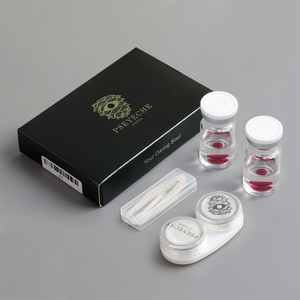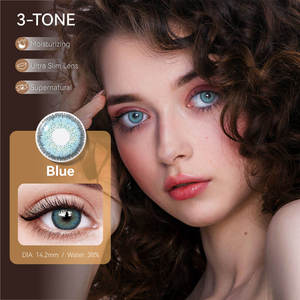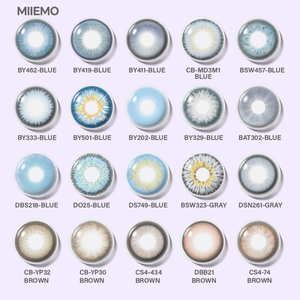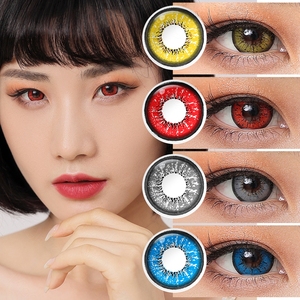
Explore our flagship OEM/ODM contact lens collections engineered for natural enhancement, high-impact cosplay, and specialized therapeutic uses, certified for direct ocean & air freight to Auckland, Tauranga, and Christchurch.
From high-street cosmetic boutiques in Auckland CBD to theatrical film production studios in Miramar, Wellington, our colored contact lenses solve diverse consumer demands with uncompromised physiological safety.
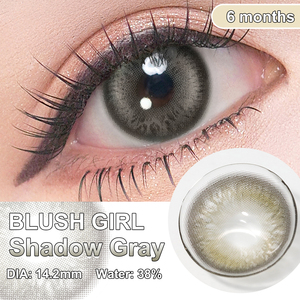
Auckland's cosmopolitan demographic drives substantial demand for subtle iris enhancement. Our natural-blend hazel, olive, and soft charcoal lenses feature microscopic dot matrices that seamlessly merge with both lighter European eyes and deeper brown Polynesian and Asian irises without artificial pupil borders.
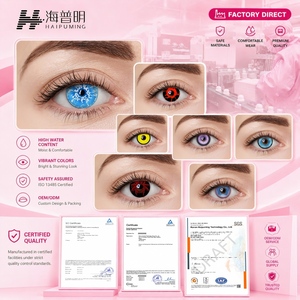
Serving New Zealand's world-renowned film industry and iconic pop-culture festivals like Armageddon Expo, our theatrical lines provide total corneal opacity. We manufacture dramatic cat-eye, red sharingan, zombie sclera, and fantasy designs that remain color-fast under intensive high-lumen film studio lighting.
Independent optometrists in Christchurch, Dunedin, and Hamilton require CE and ISO 13485 documented colored hydrogel lenses with stable base curves (8.5–8.6 mm) and precise diopter corrections from -0.50 to -8.00, allowing clinicians to prescribe cosmetic changes alongside reliable myopic correction.
Domestic e-commerce entrepreneurs scaling across New Zealand and Australia benefit from our agile low-MOQ white-label solution. With custom blister foil sealing, barcode integration compliant with GS1 NZ standards, and eco-conscious paper packaging, brands can launch seasonal SKU drops with minimal capital risk.
High-turnover retail pharmacies require stable, blister-packed daily and monthly colored lenses with prolonged shelf-life stability (up to 5 years sterile preservation in buffered saline). Our multi-language labeling and tamper-evident packaging meet the rigorous inventory protocols of premier pharmacy groups.
New Zealand’s wedding and commercial portrait sector demands subtle iris illumination without photographic bounce flare. Our semi-translucent limbal ring designs widen iris appearance under natural daylight, making them a staple accessory for bridal makeup packages throughout Hawke's Bay and Queenstown.
Navigating changing consumer preferences, health authority vigilance, and environmental considerations in the Oceanian optical market.
In New Zealand, all contact lenses (cosmetic or refractive) fall within the scope of medical devices under the Medicines Act 1981. Domestic importers must register devices on the Web Assisted Notification of Devices (WAND) database within 30 days of commercialization. Importers prioritize Chinese manufacturers holding valid ISO 13485 and CE certifications to guarantee seamless customs clearance at Auckland Airport and Port of Tauranga.
Reflecting heightened eye hygiene consciousness, Kiwi buyers are rapidly transitioning from legacy annual lenses to 1-Day and 1-Month replacement schedules. Daily disposables mitigate deposit buildup and keratitis risks, fitting active New Zealand lifestyle routines from alpine trekking to surf activities in Raglan.
Due to the Southern Hemisphere's pronounced ultraviolet exposure levels, New Zealand consumers actively seek ocular protection. Incorporating Class II UV-blocking monomers (absorbing >70% UVA and >95% UVB) directly into the polymer chain provides high-value competitive differentiation for private labels.
Local optometry associations strongly advise consumers against non-encapsulated lenses. Market demand heavily favors Sandwich Pigment Embedding technology, ensuring pigments never contact the sensitive corneal epithelial tissue, thus preserving ocular comfort in dry, air-conditioned indoor spaces.
The New Zealand contact lens marketplace has evolved beyond pure novelty purchases. Contemporary consumers demand physiological responsibility combined with hyper-realistic aesthetic delivery. Research shows that over 68% of cosmetic lens wearers in New Zealand also seek mild to moderate spherical correction (myopia), indicating that dual-purpose lenses—offering authentic optical correction along with iris coloration—dominate repeat purchase rates.
Furthermore, domestic distributors increasingly demand localized branding support. Rather than generic multilingual cartons, top-tier private labels in Wellington and Auckland commission custom blister foil and outer carton designs utilizing recyclable, FSC-certified cardboard. Chroma Lens supports this shift through turnkey packaging design solutions, including precise tamper-evident blister seals, sterile packaging compliance, and barcodes compatible with New Zealand Point of Sale (POS) retail scanning systems.
With over a decade of dedication to color contact optics, Chroma Lens Technology Co., Ltd. controls the three pivotal pillars of contact lens precision: in-house mold tooling, proprietary non-ionic ink formulation, and original biometric iris pattern generation.
We machine our own ultra-precision optical casting molds. This ensures exact base curve (BC) repeatability at ±0.02 mm tolerance, eliminating edge flare and fitting discomfort.
Formulated in our internal chemical laboratory, our biocompatible pigment formulations deliver rich color fidelity while resisting enzymatic leeching under prolonged human tear contact.
Access hundreds of copyright-cleared natural, gradient, and cosplay lens designs, or engage our optical CAD engineers to develop private patterns exclusive to your territory.
Every blister and vial carries a laser-etched batch LOT identifier linked to automated inspection logs, optical power verification curves, and bio-burden sterilization test reports.
Use this reference matrix when compiling technical files for New Zealand customs compliance and retail quality assurance.
| Verification Category | Standard Specification | New Zealand Market Relevance | Supplier QC Checkpoint |
|---|---|---|---|
| Hydrogel Polymer | PolyHema / NVP / Silicone Hydrogel options | Guarantees low lipid deposition in coastal climates | 100% monomer purity spectrum analysis |
| Hydration Level | 38% - 42% balanced equilibrium water content | Prevents lens dehydration during office screen work | Gravimetric water evaporation testing |
| Color Encapsulation | Micro-sandwich layered printing method | Zero corneal surface abrasion; meets ophthalmology criteria | Cross-section electron microscope inspection |
| Oxygen Transmissibility (Dk/t) | 11.5 - 28.0 × 10⁻⁹ (depends on base material) | Maintains corneal metabolism during recommended wear | Polarographic method oxygen permeability test |
| Sterilization Assurance | High-pressure moist steam sterilization (121°C) | Eliminates Acanthamoeba and bacterial pathogens | Biological indicator verification per production cycle |
Get practical, transparent insights regarding regulations, import duties, logistics routes, and private labeling minimums.
Under the Medicines Act 1981, cosmetic and powered contact lenses are regulated as medical devices. Importers must list the product on Medsafe's Web Assisted Notification of Devices (WAND) database within 30 working days of supply. We provide full ISO 13485, CE declaration of conformity, and technical specification dossiers to make your listing straightforward and legally robust.
For our existing, catalog-proven iris pattern collection with your custom brand logo printed on outer boxes and blister lids, our MOQ starts at just 500 to 1,000 pairs across mixed diopter powers. For completely exclusive pattern development requiring bespoke mold tooling, the starting MOQ is typically 5,000 to 10,000 pairs depending on the lens geometry.
Goods imported into New Zealand are subject to 15% Goods and Services Tax (GST). Under the China-New Zealand Free Trade Agreement (FTA), qualifying optical goods imported with a valid ChAFTA Certificate of Origin (Form G) generally enter duty-free (0% tariff). Our documentation department issues certified ChAFTA certificates with each commercial shipment.
For air express shipments (via DHL, FedEx, or dedicated air freight), transit time from our facility to Auckland Airport (AKL) or Christchurch (CHC) is typically 4 to 7 business days. For bulk container freight dispatched through sea routes to Ports of Auckland or Port of Tauranga, ocean transit normally averages 14 to 20 days depending on port schedules.
Yes. We supply both plano lenses (0.00 diopter) for pure aesthetic applications and corrective powers ranging from -0.50 to -8.00 in -0.25D or -0.50D increments. Hyperopia (+ powers) and astigmatic toric configurations can also be custom manufactured subject to minimum tooling allocations and project scoping.
We readily supply physical sample kits complete with blister packs, vial packaging, and marketing presentation booklets. Simply connect with our export team with your intended brand concept, desired lens colors, and shipping address; sample packages are dispatched within 48 hours for clinical evaluation and wear testing.
Partner with an authentic optical manufacturer possessing dedicated cleanrooms, in-house mold engineering, and proven compliance with Oceania import guidelines. Request our comprehensive OEM catalog, sample kits, and wholesale export pricing structure today.