High-Performance Theatrical & Cosplay Contact Lenses
Engineered to meet European Medical Device Regulation (MDR) standards. Featuring verified optical clarity, stable centering profiles, vivid pigment isolation, and comprehensive lens care options.
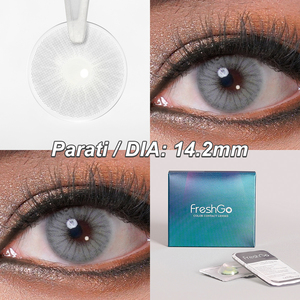
Freshgo Soft Natural Yearly Colored Contact Lens RIO Wholesale Custom Lenses
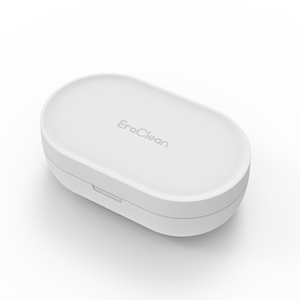
Eraclean Portable Ultrasonic Contact Lens Cleaner Case & Magnetic Box
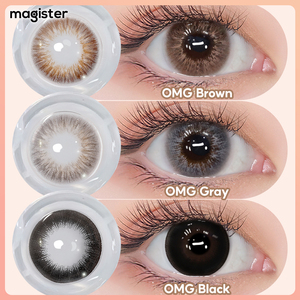
MAGISTER Comfortable High-Hydration Colored Contact Lenses Wholesale
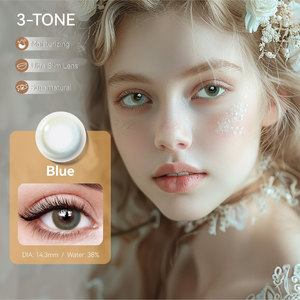
MIIEMO Stylish and Eye-Catching Colored Contact Lens OEM/ODM Collection
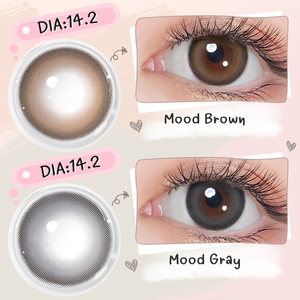
Magister Lunina Colored Contacts Factory Direct B2B Wholesale Lentilles
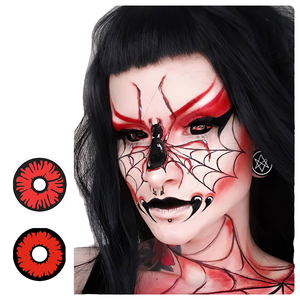
Pseyeche Halloween 22mm Full Eye Sclera Contact Lenses for Professional Cosplay
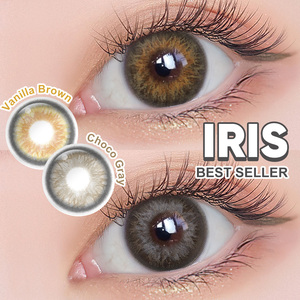
Magister Iris 14.2mm Precision Dot-Matrix Fashion Colored Contact Lenses
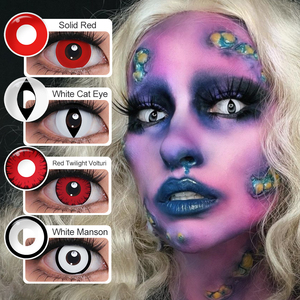
Magister Halloween Crazy Anime Sharingan Cosplay Contact Lenses
Why Tier-1 Importers Source from Our Precision Facility
Unlike trading entities and contract repackagers, we integrate mold tooling, pigment synthesis, automated casting, and optical inspection under one ISO 13485 cleanroom infrastructure.
Proprietary In-House Mold Development
We eliminate dependency on standard third-party molds. Our CNC diamond lathe tooling creates proprietary base curves (8.5mm, 8.6mm, 8.8mm) and edge profiles that maintain tear-film exchange and prevent hypoxia, even on large 17mm–22mm theatrical diameters.
Medical-Grade Bio-Compatible Pigment Inks
Cosplay color intensity requires heavy pigment saturation, which often increases surface roughness in cheap lenses. Our proprietary inorganic pigments are formulated in-house, micro-milled to sub-micron particle sizes, and suspended in biocompatible polymers that prevent leaching.
True 3-Layer Bio-Sandwich Encapsulation
Patient safety is paramount under CE MDR. Our multi-stage casting technology locks the color matrix entirely between two microscopic layers of PolyHEMA. The color never touches the cornea or palpebral conjunctiva, eliminating chemical irritation and mechanical friction.
Full CE & ISO Regulatory Documentation
We provide full technical documentation for importers, including cytotoxicity test results (ISO 10993-5), ocular irritation assays (ISO 10993-10), accelerated aging studies, and sterility assurance verification (ISO 11137 / ISO 17665) for custom packaging registrations.
Original IP & Character Pattern Library
From accurate anime pupil alignments to theatrical FX patterns, our design studio releases over 120 original SKUs annually. We provide exclusive regional mold and print licensing, ensuring private label clients do not face cross-channel brand cannibalization.
Automated Defect & Refraction Inspection
Every single contact lens undergoes high-resolution CCD optical vision sorting. Our automated cameras detect peripheral micro-tears, edge burrs, decentered visual axes, and ink spatter at 40x magnification, maintaining an industry-leading batch yield above 99.4%.
Clinical Engineering of Cosplay Lenses: Mitigating Hypoxia and Visual Axis Obstruction
In standard clear or natural cosmetic contact lenses, optical transparency and oxygen transmissibility (Dk/t) follow predictable polymer hydrodynamics. However, in theatrical and cosplay contact lenses—specifically opaque anime designs, blackout lenses, mesh filters, and full 22mm sclera shells—the application of high-density color pigments introduces severe physical challenges to ocular physiology. Sourcing directors must understand the technical boundary between novelty stage props and certified medical devices.
The primary hazard of sub-standard cosplay lenses is pigment-induced oxygen starvation. Traditional hydrogels rely on interstitial water content to transport dissolved oxygen to the avascular cornea. When heavy pigment coatings are applied directly to the surface via cheap pad-printing, they choke pore permeability, reducing effective Dk/t below the minimum 24 Fatt units necessary to prevent corneal edema during waking wear. Chroma Lens overcomes this via precision dot-matrix micro-perforation and sandwich polymer embedding, maintaining a continuous 38%–42% water channel network across both pigmented and unpigmented optic zones.
Furthermore, optical decentration during dramatic movement or dynamic stage lighting is a major cause of consumer dissatisfaction. When an opaque cosplay lens slips off-center by even 0.8mm, the printed pattern impinges upon the pupil diameter (which fluctuates between 2.0mm in bright light and 8.0mm in darkness). Our mold engineering integrates an optimized anterior aspheric geometry and posterior peripheral balance curve, ensuring the clear optical pupil zone (calibrated at 5.5mm standard) remains centered over the visual axis, eliminating "tunnel vision" and light refraction halo artifacts.
| Evaluation Parameter | Chroma Lens OEM Standard | Generic / Low-Cost Suppliers | Clinical & Commercial Impact |
|---|---|---|---|
| Pigment Isolation | Triple-Layer Bio-Sandwich (Embedded) | Direct Surface Print / Pad Coated | Zero Corneal Staining vs Corneal Erosion Risk |
| Oxygen Transmissibility (Dk/t) | 22–28 × 10-9 Fatt Units | < 9 × 10⁻⁹ Fatt Units | Maintains normal metabolic rate; prevents neo-vascularization |
| Edge Configuration | Precision Laser-Cut Beveled Edge | Square / Rough Mold Cut | Fluid Tear-Film Turnover; no foreign-body sensation |
| Clear Optical Pupil Zone | 5.5mm Constant (CAD Centered) | 3.0mm–4.0mm Irregular | Unobstructed peripheral vision under low-light ambient conditions |
| Regulatory Dossier | CE MDR, ISO 13485, US FDA 510(k) Ready | Uncertified / Basic Factory Audit Only | Seamless Customs Clearance across EU, LATAM, and NA |
Cosplay & Theatrical Contact Lens Procurement Trends
How shifting consumer demographics, omni-channel e-commerce regulations, and material sciences are reshaping international contact lens supply chains over the next five years.
Shift Toward Daily Disposable Cosplay Lines
Historically dominated by 1-year vials due to tooling economics, theatrical lens buyers now aggressively shift toward 1-day blisters. First-time convention wearers prioritize zero-maintenance hygiene. Brands adopting single-day cosplay packaging report 42% lower return rates and reduced microbial contamination liabilities.
Integrated Prescription (Rx) Customization
Novelty cosplay retailers are losing market share to optical-integrated brands. Over 68% of cosplay enthusiasts require refractive correction (-1.00D to -8.00D). Importers must partner with manufacturers offering flexible inventory allocations of power-matched theatrical lenses without massive MOQs per diopter.
Strict Traceability via UDI Serialization
Global customs authorities now enforce Unique Device Identification (UDI) Barcoding and lot-specific digital release certificates on all cosmetic contact lenses. Importers are consolidating orders with manufacturers that provide automated laser-etched matrix tracking down to individual blister lots.
Technological Evolutions in Theatrical Hydrogel Optics
Explore the breakthrough engineering innovations transitioning cosmetic lenses from niche cosplay novelties into certified high-performance biocompatible prosthetics.
Silicone-Hydrogel (Si-Hy) Cosplay Matrices
Next-generation cosplay contact lenses are migrating to fluoro-silicone hydrogel polymers, yielding Dk/t ratings exceeding 80 units. This allows comfortable 12-hour convention wear without corneal redness or microcystic epitheliopathy, opening premium-tier medical retail channels.
Ultra-High Definition Nano-Dot Printing
Moving beyond coarse analog pad-printing, our multi-nozzle micro-piezo digital printing enables 1200 DPI photorealistic iris texturing. This creates realistic anime eye luminescence, intricate pupil depths, and smooth gradient transitions that look vivid on camera and in person.
Toric & Sclera Dynamic Centration Profiles
Advanced CAD lathe cutting now integrates prismatic ballast and dynamic dual-thinning zones into theatrical sclera and patterned lenses (e.g., cat-eye, Sharingan). This stops non-rotational designs from spinning in the eye, keeping character patterns perfectly aligned during eye movement.
Frequently Asked Questions by Professional Sourcing Directors
Critical answers addressing regulatory compliance, custom pattern tooling, minimum order quantities, and shelf-life stability.
What certifications are required to import cosplay contact lenses into Europe and North America?
For the European Union, products must comply with the Medical Device Regulation (EU) 2017/745 (MDR) under Class IIa/IIb with an authorized Notified Body CE mark. The manufacturing site must maintain EN ISO 13485:2016 certification. For the US market, cosplay lenses (both plano and powered) are classified as Class II medical devices requiring an active 510(k) premarket notification clearance, establishment registration, and device listing. We supply all supporting technical files, biocompatibility test data, and Declarations of Conformity.
How does your facility verify that color pigments will not leach onto the human eye?
We use a proprietary sandwich encapsulation casting technique. The pigments are cured between the anterior and posterior base curves within the cross-linked poly-2-hydroxyethyl methacrylate (PolyHEMA) matrix. Each production lot is subjected to harsh solvent extraction tests (using alcohol and saline baths at elevated temperatures) followed by spectrophotometric evaluation. Furthermore, direct mechanical rub-fastness testing with swab friction ensures zero pigment exposure.
What is the minimum order quantity (MOQ) for custom private-label anime or cosplay patterns?
For catalog styles with custom client packaging (boxes, blister foils, instruction leaflets), our standard MOQ starts at 500 pairs per design. For completely bespoke anime patterns requiring proprietary tooling, color matching, and mold setup, our typical project threshold is 2,000 to 5,000 pairs, which can be distributed across plano (0.00) and selected diopter corrections. Production samples from our rapid prototyping cell can be provided within 14–21 business days.
What are the shelf-life stability ratings and packaging configurations available for OEM clients?
Our sealed hydrogel contact lenses carry a validated 5-year sterile shelf life supported by real-time and accelerated stability studies according to ISO 11987. We offer packaging in standard medical-grade PP blister packs sealed with peelable aluminum foil, or classic 10ml borosilicate glass vials with tamper-evident rubber stoppers and aluminum tear-off caps. All solutions contain buffered, isotonic saline without harmful preservatives.
How do you resolve centration and visibility issues on full 22mm sclera theatrical lenses?
Full 22mm sclera lenses vault over the entire cornea and rest directly on the bulbar conjunctiva. Because they cover a significantly larger surface area, proper fenestration and micro-channels for tear fluid exchange are engineered into the lens periphery to prevent suction adhesion. Additionally, our clear pupil zone is widened and centered to account for natural saccadic eye movement, ensuring that dark stage performers do not experience blackouts or peripheral blind zones.
Can you assist with country-specific packaging labeling, barcode compliance, and IFUs?
Yes. Our in-house regulatory affairs team assists international partners with localized artwork compliance. This includes multilingual Instructions for Use (IFU) leaflets matching EU MDR requirements, GS1-compliant Datamatrix and UDI barcodes, mandatory eye safety warning iconography, storage temperature indicators, and sterile barrier symbology conforming to ISO 15223-1.
Scale Your Optical Brand with Certified Contact Lenses
Partner directly with a certified manufacturer. Access our extensive library of over 500 catalog styles, proprietary mold engineering, dedicated in-house ink laboratories, and comprehensive international compliance files.