Cosplay / Theatrical
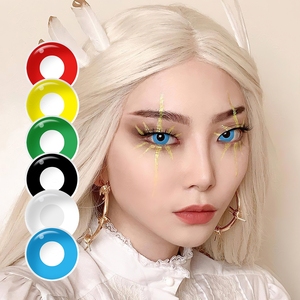
Engineered in ISO 13485 cleanroom environments with cast-molded edge smoothness, multi-layer sandwich pigment isolation, and high physiological water content.
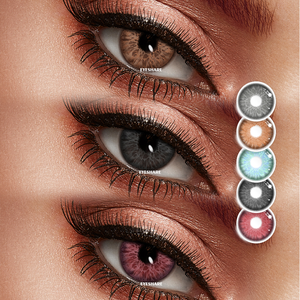
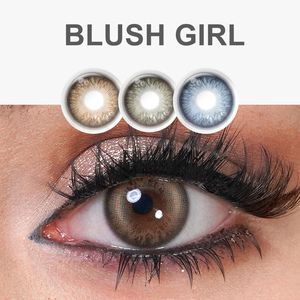
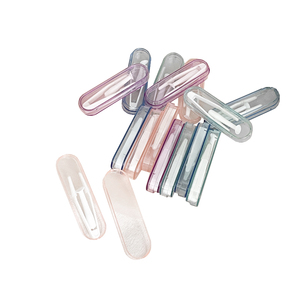
Why international distributors, pharmacy chains, and cosmetic retail brands are prioritizing 1-Day daily disposable colored contact lenses over conventional annual modalities.
In the contemporary ophthalmic and cosmetic eyewear sector, daily disposable colored contact lenses (1-Day Modality) represent the fastest-expanding product category across North America, the European Union, Southeast Asia, and the Middle East. Historically, the colored lens market was predominantly saturated with polymacon-based quarterly and annual replacement modalities packaged in glass vials. However, shifting consumer health paradigms, aggressive clinical recommendations by optometrists, and stricter medical device regulatory standards (such as the EU MDR 2017/745 and US FDA 510(k) requirements) have accelerated the transition toward daily disposables.
From a physiological perspective, daily disposables eliminate the risk of bacterial biofilm formation, tear-protein denaturation, and lipid build-up on the lens surface. Contact lens wearers are no longer burdened by lens care regimens involving multipurpose disinfectant solutions, hydrogen peroxide systems, and lens storage cases, which have historically been identified as the leading vectors for microbial keratitis and giant papillary conjunctivitis (GPC). For brand owners and wholesale importers, daily disposable colored lenses offer exceptional commercial lifetime customer value (LTV): instead of buying one pair per annum, consumer repurchases occur monthly in 10-pack, 30-pack, or 90-pack retail configurations.
A critical technical distinction in the wholesale production of daily colored lenses is the polymer formulation. Our manufacturing plants deploy optimized polymeric blends tailored to target market demographics:
Safety is the primary prerequisite in ophthalmic contract manufacturing. Lower-tier manufacturers often employ superficial pad printing where the pigment resides exposed on the anterior or posterior surface of the contact lens. When exposed, cosmetic color pigments can leach into the tear film or physically abrade the delicate corneal epithelial microvilli.
Our OEM factory utilizes proprietary Semi-Cast & Full-Cast Sandwich Micro-Encapsulation Technology. In this industrial process, non-ionic, pharmaceutical-grade mineral dyes (Iron Oxides, Titanium Dioxide, Phthalocyanine complexes) are embedded directly within the mid-layer of the polymer matrix. High-molecular weight polymer barriers form on both the anterior surface (facing the eyelid) and the posterior surface (facing the cornea), achieving zero pigment elution. The surface of the lens remains atomically ultra-smooth, preserving the post-lens tear film (PLTF) and mitigating friction during blinking.
Chroma Lens Technology Co., Ltd. controls the mission-critical parameters of colored contact lens synthesis under one unified quality management system.
We engineer and machine our own ultra-high precision optical molds with sub-micron diamond turning lathe equipment. This guarantees exact corneal curvature control (BC), zero center thickness deviation, and seamless round edge profiles.
Ink formulations are developed internally in our sterile ophthalmic lab. We achieve biocompatible color vibrancy, sharp dot-matrix definitions, stable viscosity, and uncompromised batch-to-batch chromatic repeatability without fading.
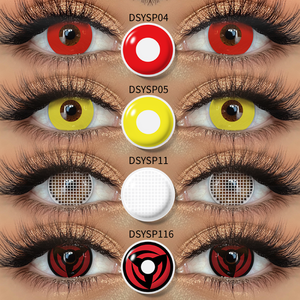
Our dedicated optical aesthetic design department creates exclusive patent-registered natural iris simulations, limbal ring gradations, and intricate cosplay motifs, shielding private-label clients from copyright litigation.
We provide turnkey regulatory documentation for global market customs clearance and ministry of health registrations, including ISO 13485:2016 audit reports, CE certifications, biocompatibility tests (ISO 10993), and product master files.
Engineered to conform with ISO 18369 ophthalmic optics standards for contact lenses.
| Evaluation Parameter | Standard Cosmetic Hydrogel | Premium Daily Hydrogel (HEMA-NVP) | Advanced Daily Silicone Hydrogel |
|---|---|---|---|
| Replacement Frequency | Daily / Monthly / Quarterly | 1-Day Disposable (Single Use) | 1-Day Disposable (Single Use) |
| Base Curve (B.C.) Range | 8.50mm – 8.60mm (±0.05mm) | 8.50mm – 8.60mm (±0.02mm) | 8.50mm – 8.70mm (±0.02mm) |
| Overall Diameter (DIA) | 14.0mm, 14.2mm, 14.5mm | 14.0mm – 14.2mm | 14.1mm – 14.3mm |
| Water Content by Weight | 38% – 42% | 55% – 58% | 45% – 48% |
| Oxygen Permeability (Dk/t) | 15 – 22 × 10⁻⁹ | 28 – 35 × 10⁻⁹ | 85 – 120 × 10⁻⁹ |
| Center Thickness (at -3.00D) | 0.080mm | 0.060mm – 0.075mm | 0.070mm – 0.085mm |
| Color Pigment Encapsulation | Surface Pad Print / Embedded | Sandwich Micro-Polymer Lock | Co-Polymer Full Cast Encapsulation |
| Diopter Power Range | 0.00 to -8.00D (0.25D / 0.50D steps) | 0.00 to -10.00D (Extended Power) | 0.00 to -10.00D + Custom Toric |
| Packaging Modality | Vial / Polypropylene Blister | Alu-Foil Buffered Saline Blister | UV-Blocking Hyaluronate Blister |
A transparent view into our automated cleanroom mass-production lines from raw monomer blending to terminal steam sterilization.
Optical graphic designers translate color palettes into multi-dot screens. Pupillary clearance zones (typically 3.8mm to 4.5mm) and limbal coverage gradients are calculated mathematically to fit naturally over dark or light irises.
Single-use male and female optical molds are injection molded using virgin medical-grade polypropylene. Molds are scrutinized under laser interferometers to confirm zero surface defects and exact sagittal depth.
Multi-station automated robotic silicone transfer pads stamp our proprietary non-toxic pigments onto the concave mold surface. Automated camera vision systems verify pattern alignment with sub-10-micron precision.
Liquid monomer blends (HEMA, EGDMA cross-linkers, and photo-initiators) are dispensed into the printed mold. The combined assembly passes through precision UV and thermal curing tunnels, fusing the lens and trapping pigments permanently.
Demolded xerogel lenses undergo multi-stage de-ionized water hydration cycles to achieve equilibrium water content. Every individual hydrated lens passes through 100% Automated Optical Inspection (AOI) to detect edge nicks, tears, or bubbles.
Lenses are packed into pharmaceutical PP blisters containing borate or sodium hyaluronate-buffered saline (pH 7.2–7.4). Strips are heat-sealed with multi-laminate aluminum foil and sterilized via terminal saturated steam autoclave at 121°C for 30 minutes.
Strategic guidance for procurement directors, distributors, and e-commerce brand builders aiming to capture market share over the next decade.
Regulatory authorities in Tier-1 markets are tightening import scrutiny on 1-year contact lenses due to compliance risks. Institutional buyers are reallocating supply chain capital to daily and monthly disposables, where repeat sales velocity is significantly higher.
Next-generation daily disposables are migrating from basic saline storage to blister solutions formulated with Sodium Hyaluronate (HA) and Poloxamers. This locks in moisture, reduces dry-eye sensation during prolonged digital screen use, and provides instant all-day comfort.
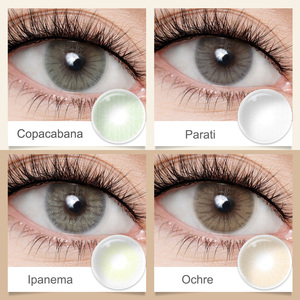
The era of unnatural blocky color rings has ended. Procurement data reveals that over 74% of beauty consumers prefer 3-tone and 4-tone subtle gradient patterns that replicate radial iris furrows, limbal shadows, and hazel depth without artificial borders.
ESG initiatives across retail groups demand smaller footprint packaging. Factories are re-engineering blister packs with 30% less polypropylene, using recyclable foil tops and non-toxic soy ink on secondary carton boxes to minimize ecological waste.
Astigmatic cosmetic lens wearers represent an underserved premium demographic. High-capability factories with multi-axis CNC lathe molds are introducing Toric Colored Daily Disposables with prism ballast stabilization to fulfill this lucrative market gap.
Brands now require lower initial batch minimums (Low MOQs) paired with rapid packaging customization. Our agile production cell framework enables emerging direct-to-consumer (DTC) brands to launch bespoke packaging runs within 3 to 4 weeks.
Direct answers to the most critical technical, regulatory, and logistics queries encountered by international procurement managers.
For catalog styles with standard blister packaging and OEM private label outer boxes, our factory MOQ typically starts at 1,000 to 3,000 pairs (2,000 to 6,000 blisters) across balanced power distributions (plano 0.00 to -8.00D). For fully bespoke iris patterns requiring custom print cliché plates and proprietary mold adjustments, the initial production batch is generally set at 10,000 blisters per colorway to offset injection setup and automated optical calibration costs.
We execute strict adherence to the Sandwich Micro-Encapsulation Method. The color layers are cast in-between monomer matrices, ensuring that both the front surface and the rear base-curve surface consist exclusively of smooth medical-grade poly-HEMA or silicone polymer. Every batch undergoes solvent extraction testing and cotton-swab rub resistance audits under stereoscopic magnification. Under no circumstances is pigment directly exposed to corneal tissue.
Our facility operates under an accredited EN ISO 13485:2016 medical device quality management system. Our products hold CE mark certification under European Medical Device Directives/MDR pathways and possess valid Free Sale Certificates (FSC). For United States FDA, Saudi SFDA, Brazilian ANVISA, and Southeast Asian MOH import submissions, we provide comprehensive technical files including 510(k) supporting data, ISO 10993 cytotoxicity, systemic toxicity, and ocular irritation study reports.
Our sealed aluminum foil blisters provide an validated sterile shelf life of 5 years (60 months) from the date of terminal steam autoclave sterilization. Stability testing reports, real-time aging data, and accelerated shelf-life stability analyses conducted according to ISO 11987 standards are available for review prior to bulk shipment dispatch.
Yes. We manufacture both plano cosmetic lenses (power 0.00D) and prescription vision correction lenses ranging from -0.50D to -6.00D in 0.25D increments, and from -6.00D to -10.00D in 0.50D increments. Hyperopic powers (+0.50D to +4.00D) and custom astigmatic toric configurations are manufactured to order via precision diamond-machined mold inserts.
We provide end-to-end turnkey OEM packaging solutions. Clients can choose from 2-pack trial blisters, 5-pack, 10-pack, 30-pack, and 90-pack retail folding cartons. Packaging finishes include premium soft-touch coatings, spot high-gloss UV, anti-counterfeiting holographic seals, and hot gold/silver foil stamping. Multilingual leaflets and compliant GS1-128 / UDI barcode labeling are integrated directly into our automated carton packing lines.
For existing catalog designs with confirmed packaging artwork, production turnaround is typically 15 to 25 working days. For brand new bespoke pattern development, the sampling phase requires approximately 10 to 14 days for pattern proofing and mold tooling trial, followed by 30 days for sterile cleanroom mass manufacture, packaging, autoclave sterilization, and batch quality release documentation.
Every single production batch undergoes rigorous quality gate protocols. We employ multi-sensor non-contact optical comparators to verify base curve sagitta, center thickness, and peripheral edge profile smoothness. In addition, 100% of our daily disposable lenses are routed through an automated in-line high-resolution camera inspection system (AOI) to filter out edge burrs, internal bubbles, and printing offsets before entering the blister heat-sealing stage.
Whether you are expanding an established optical chain, launching a direct-to-consumer cosmetic contact lens line, or sourcing high-volume daily disposable inventory, our engineering team provides direct factory pricing, certified cleanroom reliability, and comprehensive OEM support.
Contact Us