Curated B2B Sourcing Selections & Specialty Lenses
Manufactured using calibrated optical polymers, micro-encapsulated inks, and anatomical edge formulations tailored for global optical and cosmetic distribution.
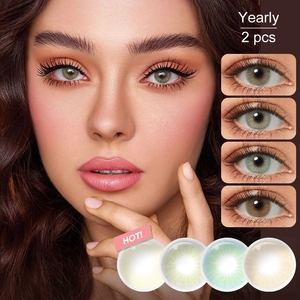
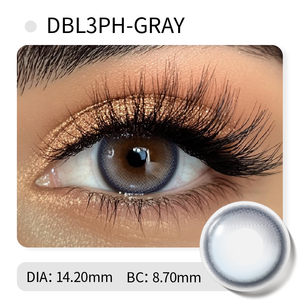
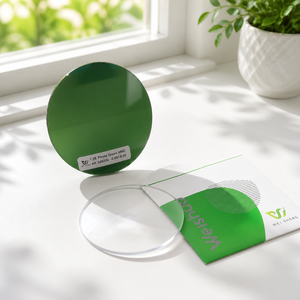
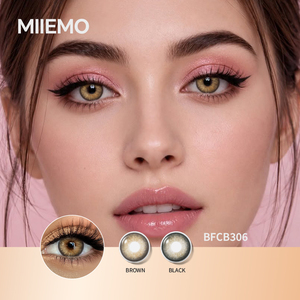
1. Advanced Polymer Chemistry & The Micro-Sandwich Encapsulation Advantage
In contemporary ophthalmological commerce, wholesale green colored contact lenses occupy an intricate technical nexus. Formulating a natural yet commanding olive, emerald, or jade hue over dark Asian or Mediterranean irises requires dense, high-saturation chromatic layering without forfeiting oxygen transmissibility (Dk/t) or physiological corneal respiration.
Unlike legacy silk-screen surface printing—which risks toxic pigment leaching, epithelial irritation, or abrasive friction during blinking—our ISO 13485 cleanroom infrastructure utilizes Triple-Layer Sandwich Micro-Pigmentation. The biocompatible iris pattern is fully entrapped between cross-linked poly-HEMA or silicone-hydrogel layers. Consequently, colored bio-inks never touch the corneal epithelium or tarsal conjunctiva, maintaining a lubricious surface with friction coefficients below 0.015.
| Evaluation Parameter | Sandwich Cast Molding (Our Standard) | Surface Pad Printing (Legacy Market) | Clinical Directives & Buyer Relevance |
|---|---|---|---|
| Pigment Encasement | 100% Interspersed Intra-Matrix Barrier | Direct Outer-Surface Inking | Eliminates keratitis risks and chemical micro-leaching. |
| Water Matrix Stability | 38% – 42% Hydrated HEMA / Poly-HEMA | Fluctuating (35% - 55%) | Maintains osmotic equilibrium without absorbing tears. |
| Base Curve Precision (BC) | 8.5mm – 8.6mm (±0.02mm) | ±0.08mm Variation | Prevents lens decentration, corneal hypoxia, and blur. |
| Optical Clearance Zone | Calibrated 3.8mm to 4.2mm Clear Aperture | Irregular or Obtrusive Border | Avoids chromatic vignetting and tunnel-vision symptoms. |
| Modulus & Elasticity | 0.35 to 0.48 MPa Flexibility | High Rigidity (>0.65 MPa) | Guarantees soft drape over cornea for day-long ergonomics. |
Furthermore, chromatic color balancing for green contacts demands multi-tonal iris printing. By utilizing a tri-tone matrix—incorporating a light golden-hazel inner pupillary blend, an emerald radial striation zone, and a soft charcoal limbal ring—the final lens delivers depth without looking flat or synthetic. This realism is what drives repeat wholesale reorders and end-consumer loyalty across cross-border e-commerce networks.
Why Global Distributors Partner With Our Supply Chain
By bringing mold production, monomer synthesis, ink chemistry, and packaging under one roof, we eliminate third-party delays and reduce batch-to-batch variations.
Proprietary CNC Micro-Molds
We craft our own ultra-precision optical cast-molds in-house. This gives us micro-fine control over sagittal depth, edge rounding, and center thickness down to ±0.005mm.
Medical-Grade Bio-Inks
Our lab-synthesized, FDA-compliant ophthalmic pigments undergo rigorous cytotoxicity and degradation testing, guaranteeing vivid green hues that never compromise ocular safety.
Custom Pattern R&D
Our optical and graphic designers develop brand-exclusive iris textures—from subtle translucent hazels to dense theatrical emeralds—helping you stay ahead of fast-changing market trends.
Full Regulatory Dossiers
We supply ISO 13485 certification, CE clinical summaries, Certificate of Free Sale (CFS), and batch test records (CoA) to ensure smooth customs clearance across international borders.
Emerging Procurement & Product Trends for 2025–2030
Understanding shifting consumer demands and regulatory frameworks gives purchasing executives and brand owners a decisive competitive edge.
1. Daily Disposable (1-Day) Dominance
While monthly and yearly disposable lenses maintain a solid presence in cost-conscious retail channels, the global beauty market is shifting heavily toward single-use daily disposables. Daily options minimize user error, eliminate case contamination risks, and generate consistent, recurring replenishment orders.
2. Silicone-Hydrogel (SiHy) Infiltration
Cosmetic lenses are moving from traditional HEMA hydrogels to high-oxygen silicone-hydrogel substrates. This upgrade elevates Dk/t from the conventional 15-25 range to over 80 barrers/cm, expanding the market to consumers who need longer, all-day wearing comfort.
3. Natural "No-Border" Limbal Aesthetics
The trend is turning away from harsh, blocky black limbal borders. Gen-Z and millennial buyers increasingly prefer subtle, dot-matrix transitions with soft, gradient-rimmed hazel, pistachio, and olive hues that blend seamlessly with natural iris textures.
4. Sustainable Blister & Recycled Packaging
International environmental regulations are accelerating the move toward thinner blister foils, non-PVC shells, and FSC-certified biodegradable paper boxes. Forward-thinking procurement teams are upgrading packaging sustainability to align with ESG criteria.
5. Hybrid Cosmetic-Toric Capabilities
Consumers with astigmatism are no longer content with standard clear correction. Combining back-surface toric geometries with multi-tone cosmetic green printing opens a high-margin, underserved specialty niche for retail brands.
6. Rapid-Turnaround Small-Batch OEM
Influencer-led brands and agile e-commerce labels require smaller initial runs to test new color trends before scaling up. Our flexible modular production lines support fast sampling runs and quick reorders, keeping initial inventory risk manageable.
Frequently Asked Questions by Professional Importers
Direct answers covering testing standards, minimum order quantities (MOQs), private labeling, and global customs procedures.
What are the typical minimum order quantities (MOQs) for custom private label packaging?
For standard catalog styles packaged in our white-label or neutral blister boxes, wholesale orders can begin with low test batches. For custom private-label box printing and branded blister foil sealing, MOQs generally start at 500 to 1,000 pairs per power increment, allowing cost-effective setup without tying up excess capital.
How do you verify pigment safety and prevent the color from contacting the wearer's cornea?
We use an automated cast-molding process that seals the FDA-grade micro-pigment layer securely between two clear hydrophilic polymer sheets (the sandwich method). Each production lot undergoes optical profilometry, saline extraction assays, and accelerated friction rubbing tests to confirm zero pigment exposure.
Can our order combine plano (0.00) cosmetic lenses with corrective power prescriptions?
Yes. We offer both plano cosmetic lenses and prescription powers ranging from -0.50D to -8.00D (in 0.25D increments up to -6.00D, and 0.50D steps beyond). You can tailor power distributions to match the demographic needs of your target market.
What documentation is provided to clear medical customs inspections in the Americas and Europe?
We supply full product specification dossiers, ISO 13485 quality system certificates, CE mark documentation, Certificates of Analysis (CoA) for each batch, cytotoxicity screening data, and sterilized packaging test certificates to ensure swift regulatory approval.
What is the typical production and lead time for mass wholesale orders?
In-stock catalog designs are prepared and dispatched within 3 to 7 business days. Custom OEM runs—including pattern printing, mold adjustments, sterile blister packaging, and exterior branding—typically ship within 20 to 35 business days from final sample and artwork approval.
Ready to Build or Scale Your Contact Lens Line?
Speak directly with our senior optical engineers and international OEM accounts team. We will review your technical specifications, confirm design prototypes, and send custom samples directly to your facility.
Contact Us