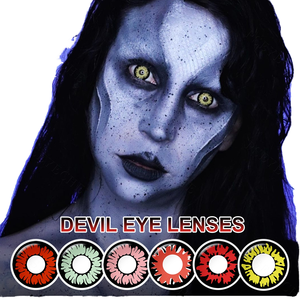
Cosplay / Theatrical
Engineered for high pigment density, true natural blend on dark eyes, and medical-grade biocompatibility.
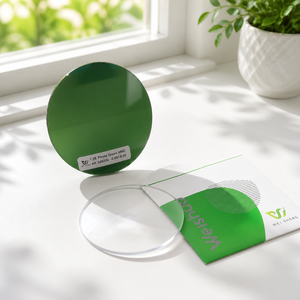
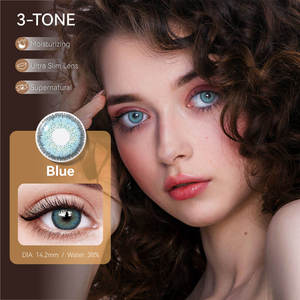
Why Tier-1 global cosmetic lens brands consolidate their supply chain with China’s integrated hazel lens innovators.
We eliminate dependency on standard third-party tooling. With computerized ultra-precision CNC lathes, our internal tool-and-die team creates custom front and base curve molds within 0.005mm accuracy tolerances, allowing agile base-curve (8.5mm to 8.6mm) prototyping.
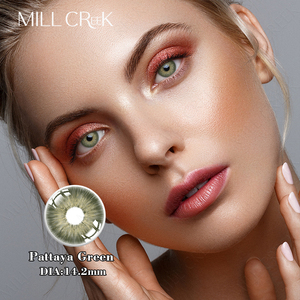
Hazel contact lenses demand a complex multi-chromatic transition: blending golden amber, soft honey, olive undertones, and radial deep brown limbal rings. Our in-house synthesized, non-leaching medical ink formulations ensure vivid coverage even over deep brown irises.
Corneal safety is non-negotiable. Our 3-layer "Sandwich" cast-molding encapsulation places microscopic pigment particles hermetically locked between two transparent HEMA layers. The dye never contacts the corneal epithelium or palpebral conjunctiva.
Exporting contact lenses requires rock-solid qualification. We supply comprehensive technical dossiers, including material biocompatibility assays (ISO 10993 cytotoxicity, ocular irritation, systemic toxicity), sterility assurance level (SAL 10⁻⁶), and full export documentation.
Actionable market intelligence for enterprise buyers navigating 2026–2030 optical retail and cosmetic distribution.
Historically dominated by annual and quarterly wear due to unit economic considerations, the international market is pivoting rapidly to daily disposable (1-Day) color contacts. Driven by clinical concerns regarding microbial keratitis and protein deposits, cross-border buyers are leveraging China's automated high-cavity wet-cast packaging systems to hit target commercial price points on 10-pack and 30-pack daily blister cartons.
Traditional Poly-HEMA lenses typically display Dk (oxygen permeability) ratings between 8.5 and 12 Barrers. Next-generation hazel lenses are integrating fluorosilicone macromers, delivering Dk/t values exceeding 65 to 80 Barrers. This radical leap ensures long-hour corneal metabolic oxygenation, drastically reducing limbal hyperemia and allowing wearers to maintain moist, radiant eyes from morning to night.
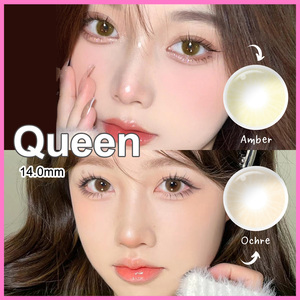
The greatest hurdle in hazel colored contacts has always been the "artificial bug-eye" aesthetic on naturally dark Asian or African irises. Our latest procurement lines utilize high-density, variable-translucency dot matrices. By engineering a gentle gradient fading into an enlarged 4.2mm central optical clearance, the wearer's real crystalline eye blends smoothly into amber, hazel, and green undertones.
| Technical Criterion | OEM Standard Spec | Premium Silicone Hydrogel Spec | Quality Verification Method |
|---|---|---|---|
| Base Curve (BC) | 8.50mm – 8.60mm (±0.02mm) | 8.60mm (±0.02mm) | Chostner Optical Comparator / Sagittal Radius Meter |
| Total Diameter (DIA) | 14.0mm / 14.2mm / 14.5mm | 14.1mm – 14.3mm | High-Magnification Projection Sizing (ISO 18369-3) |
| Center Thickness (CT) | 0.080mm @ -3.00D (±0.008) | 0.070mm – 0.085mm | Electronic Thickness Gauge with spherical anvil |
| Water Content (WC) | 38% – 42% by weight | 45% – 55% with low dehydration rate | Abbe Refractometer Method at 20°C |
| Oxygen Permeability (Dk) | 8.5 – 11.0 × 10⁻¹¹ Barrers | 65.0 – 90.0 × 10⁻¹¹ Barrers | Polarographic Method (ISO 18369-4) |
| Pigment Fixation | 3-Layer Embedded Sandwich | Plasma Matrix Lock | Rubbing Test (Saline & Ethanol Swab) + SEM Cross-section |
Mitigate customs seizure, product recall, and liability claims with professional technical due diligence.
Medical contact lenses are classified under Class II / Class III ophthalmic devices across most international jurisdictions. During your physical or third-party factory inspection in China, verify that polymerization casting, demolding, extraction, and primary packaging take place in a certified ISO Class 7 (Class 10,000) or ISO Class 8 (Class 100,000) Cleanroom. Inquire specifically about the multi-stage Reverse Osmosis (RO) and Deionized (EDI) water purification system. Extraction water conductivity must strictly remain below 1.0 μS/cm to completely dissolve residual unreacted monomers (HEMA, EGDMA, MAA) from the lens matrix.
Foreign body sensation and corneal abrasion are direct consequences of ragged edge finish resulting from dull mold separation. In our precision fabrication facility, 100% of finished lenses undergo automated machine-vision defect inspection using ultra-high-speed telecentric line-scan cameras. Any lens showing edge burrs, scalloping, decentered pigment prints, air bubbles in the optical zone, or dimensional eccentricity exceeding ±0.03mm is automatically rejected via air-jet sorters before entering the autoclave cycle.
Whether packaged in borosilicate glass vials with medical bromobutyl rubber stoppers or polypropylene (PP) thermoformed blisters with laminated peelable medical foil, sterile barrier integrity must remain intact for 3 to 5 years shelf life. Professional buyers should demand documented reports on Dye Ingress Bubble Leak Testing (ASTM F2096) and Seal Peel Strength Testing (ASTM F88). Accelerated aging tests conducted at 55°C and 75% relative humidity validate that base curve stability, pH balance of buffered borate saline (6.8–7.4), and osmolality (280–320 mOsm/kg) remain unwavering throughout the stated product cycle.
Straightforward answers addressing OEM minimums, pigment safety, and private label timelines.
For existing, validated factory catalog iris patterns with private label blister or vial packaging, our MOQ generally starts at 500 to 1,000 pairs across standard power gradations (Plano 0.00 up to -8.00 in 0.25D or 0.50D increments). For completely bespoke pattern design where exclusive pad-printing cliches and customized ink mixing formulas must be created, initial runs start at 5,000 pairs per SKU to balance cast-molding setup costs.
We deploy high-precision Full Sandwich Injection Casting. The outer hydrophilic monomer layer is injected and partially cured; next, the color matrix is pad-printed onto this substrate; finally, the secondary optical monomer layer is cast over the pigment and fully polymerized under thermal or UV irradiation. The inorganic dye is permanently locked within the core polymer lattice. The external surfaces that touch the cornea and eyelids remain virgin, pristine optical polymer.
Regulations vary widely by region. In the United States (US FDA), all contact lenses—including Plano non-prescription cosmetic lenses—are designated as Prescription Class II / Class III Medical Devices requiring 510(k) clearance. In the European Union, the MDR (Medical Device Regulation 2017/745) Annex XVI categorizes cosmetic contacts lacking medical intent under identical stringent safety rules as optical devices. We provide verified technical files, conformity declarations, and compliant labeling to assist your import compliance.
Sample cliches and pilot lens proofs are manufactured and dispatched via DHL within 10 to 14 business days. Following your physical verification and packaging artwork sign-off, full commercial manufacturing, secondary packaging, sterilization cycles, and mandatory 14-day post-autoclave biological incubation tests are completed in approximately 30 to 40 days.
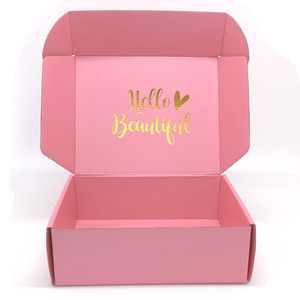
Yes. Our in-house packaging and structural engineering division produces double-sided offset-printed airplane boxes, rigid cosmetic presentation cartons with hot foil stamping, custom blister blister-foil lamination, and branded companion accessories (cleaner kits, cases, and insertion wands).
Request technical specification dossiers, evaluate physical sample batches, or launch your proprietary custom-formulated cosmetic lens brand with full regulatory and manufacturing confidence.
Send an Inquiry