Engineered Ophthalmic & Novelty Lens Portfolio
Precision-cast cosmetic, theatrical, and specialty white contact lens series compliant with strict international biocompatibility frameworks.

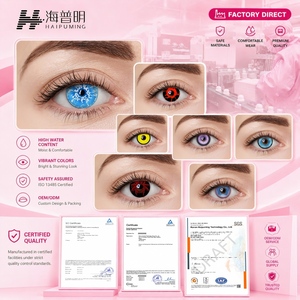
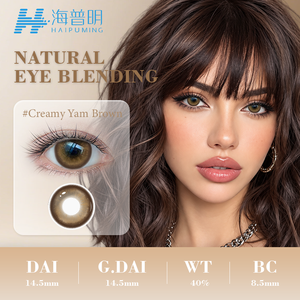
White Contact Lens Engineering: A Comprehensive Technical Overview
White contact lenses represent the zenith of precision polymer fabrication in the cosmetic and theatrical hydrogel segment. Whether developing fully occlusive white-out lenses, complex anime/cosplay expressions, or micro-mesh blind optics, the structural mandate demands an uncompromising balance between complete chromic opacity and sustained physiological safety. Traditional color enhancement lenses rely on semi-translucent dot-matrices that blend with the wearer's natural iris structure; in sharp contrast, white contact lens manufacturing necessitates deep, high-load titanium dioxide (TiO₂) and zinc oxide formulations designed to block out dark pigmentation completely without compromising oxygen permeability (Dk/t) or mechanical compliance.
As international brand distributors and regional volume importers evaluate their supply chains, sourcing from verified medical-device manufacturers is critical. Contact lenses reside firmly in regulated medical classifications (FDA Class II, CE MDR Class IIa/IIb). Sourcing substandard white lenses risks chemical leeching, corneal hypoxia, micro-abrasions, and strict customs seizure. As a premier integrated manufacturer with complete ownership over our physical engineering chain, our white contact lenses deliver clinical reliability, uniform corneal centering, and vivid pigment stability for global brands, optometry chains, and theatrical cosmetic distributors.
Industrial Integration: Proprietary Chemical Inks & Sandwich Encapsulation
The foremost technical risk associated with high-pigment decorative lenses is direct epithelial surface contact. Chroma Lens bypasses third-party compound dependencies by engineering proprietary, biocompatible printing inks synthesized directly within our class 10,000 cleanroom facilities. The dense white pigment layer is cast via advanced micro-pad printing and fully suspended between two distinct, non-cytotoxic poly-HEMA hydrogel layers. This three-tier "Sandwich Encapsulation" architecture guarantees zero pigment leakage, prevents color degradation from multi-purpose disinfecting solutions, and preserves an ultra-smooth anterior and posterior surface with microscopic wettability.
Future Sourcing & Procurement Trends (2025–2030)
Actionable procurement intelligence for purchasing directors navigating changing global supply dynamics.
1. Transition to High-Moisture Silicone Hydrogels
While traditional 2-HEMA polymers retain market dominance for annual wear cost efficiency, institutional importers are shifting toward silicone hydrogel formulations. The higher Dk values prevent neovascularization in thick opaque designs, aligning theatrical lines with mainstream optical safety standards.
2. Daily Disposable Penetration
Theatrical lenses have historically relied on yearly replacement intervals. Driven by ocular hygiene mandates in North America and Western Europe, enterprise buyers are migrating seasonal inventory into single-use blister packaging (Daily / Monthly) to reduce customer maintenance liability.
3. Traceability Auditing Under MDR
Global regulatory bodies require end-to-end device traceability. Sourcing decisions must factor in full batch-specific manufacturing documentation (DHR), biocompatibility test protocols, and integrated Unique Device Identification (UDI) directly embedded into primary cartons.
4. Demand for Specialty Optical Geometry
Novelty requirements now consistently demand toric cosmetic combinations, corrective diopter ranges (0.00 to -8.00D), and customized pupil aperatures (such as micro-mesh white vision lenses) to satisfy professional cosplayers and screen actors without inducing tunnel vision.
5. Direct-to-Consumer Packaging Adaptation
B2B importers are minimizing downstream logistics overhead by contracting direct private label assembly. This includes customized sterile blister sealing, individualized barcoding, multi-lingual package inserts, and unified secondary outer boxing prepared at point-of-origin.
Ophthalmic Technology Evolution: The Engineering of White Contacts
Early iterations of opaque cosmetic contacts suffered from structural rigidity, high incidence of ocular dryness, and optical eccentricity (drifting off-center during blinks). The development trajectory of modern white contact lenses centers around solving three critical biomedical hurdles: micro-edge profiling, fluid exchange dynamics, and high-opacity chromophore integration.
Precision cast molding technology, controlled by computerized numerical machining (CNC) lathes producing mirror-finish molds, allows for a beveled, parabolic edge geometry. When an individual blinks, this tapered edge minimizes friction across the sensitive palpebral conjunctiva, permitting natural tear exchange beneath the hydrogel matrix. Without this micro-engineered edge, high-coverage lenses trap metabolic byproducts, causing epithelial stress. Furthermore, by balancing hydrophilic monomer crosslinking with stable hydration parameters (38% to 42% water content), the structural equilibrium of the lens resists protein deposits while preserving dimensional stability across 8 to 12-hour continuous wear spans.
| Technical Parameter | Standard Specification Range | Quality & Biomedical Significance |
|---|---|---|
| Base Curve (BC) | 8.50 mm – 8.60 mm (±0.02 mm) | Controls sagittal depth to prevent mechanical pinching or excessive slippage across standard corneal shapes. |
| Diameter (DIA) | 14.0 mm – 14.5 mm (Theatrical: up to 14.8 mm) | Determines aesthetic limbal coverage; balanced to prevent limbal compression and localized ischemia. |
| Water Content | 38% – 42% (Hydrogel) | Optimizes structural tensile strength while minimizing dehydration-induced tear evaporation in prolonged wear. |
| Center Thickness | 0.07 mm – 0.08 mm (@ -3.00D) | Thin profile engineered to maximize passive oxygen transmissibility (Dk/t) through dense white pigments. |
| Optical Transmission | Clear Aperture: 98% / Mesh Zone: 40-60% | Guarantees functional photopic clarity via pristine central pupil aperture (standard 5.0 mm - 5.5 mm). |
| Sterilization Standard | Moist Heat Autoclaving (≥121°C, 30 min) | Guarantees a Sterility Assurance Level (SAL) of 10⁻⁶, fully eliminating spore and bioburden contamination. |
Why Global Importers Partner with Chroma Lens
Eliminating supply chain vulnerability through vertically integrated lens engineering and proprietary chemistry.
In-House Mold Tooling & Lathe Production
Unlike repackagers or assembly brokers, we engineer and produce precision lens molds in our own cleanrooms. This gives our B2B partners rapid sampling capability, exact curvature adherence, and sub-micron edge consistency without third-party delay.
Proprietary Biocompatible Pigments
Our formulation laboratory develops original medical-grade printing inks with micro-milled particles. These inks deliver maximum color saturation on dark eyes while resisting mechanical abrasion and chemical oxidation inside standard packaging saline.
Verified Multi-Market Regulatory Compliance
We provide full dossier support for target import jurisdictions, including comprehensive toxicological summaries, mechanical stability tests, accelerated real-time shelf life reports (up to 5 years), and standardized sterile barrier inspection sheets.
Frequently Asked Questions for B2B Importers
Technical, regulatory, and logistics clarifications addressing core commercial inquiry parameters.
How does your manufacturing prevent white pigment cytotoxicity and leaching?
What are the typical MOQ constraints and lead times for OEM private labeling?
Can opaque white contact lenses cause tunnel vision or visual field constriction?
What shelf-life stability and sterilization validation documentation do you supply?
How do you ensure batch-to-batch color density across repeat shipments?
Ready to Scale Your Contact Lens Distribution?
Initiate direct commercial discussions with our engineering and regulatory export team. Request bespoke sample kits, complete technical dossiers, or custom OEM quote matrices.
Send an Inquiry