Unlocking the Ethiopian Contact Lens Opportunity
As East Africa's second most populous nation, Ethiopia is witnessing an accelerated retail transformation across Addis Ababa, Hawassa, and Dire Dawa. From fashion boutiques in Bole Medhanealem to specialized optical clinics, the commercial demand for certified cosmetic contacts is scaling exponentially.
Engineered Cosmetic & Optical Collections
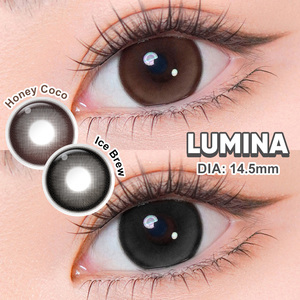
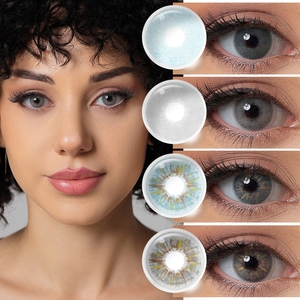
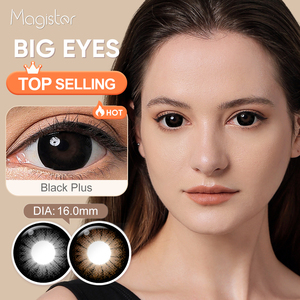
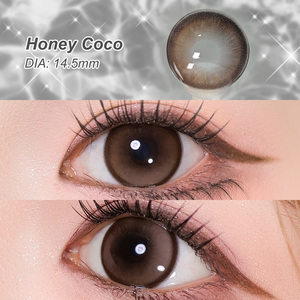
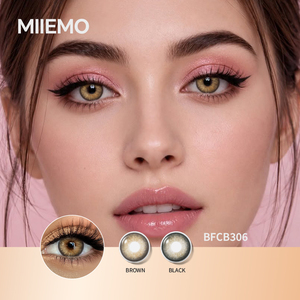
Direct factory configurations ready for wholesale, private label, and commercial distribution in Ethiopia, featuring high-opacity matrices formulated specifically for dark melanin irises.

Contextual Application Scenarios Across Ethiopia
Supplying the Ethiopian beauty and ophthalmic markets requires an acute understanding of physiological factors, cultural milestones, and geographical altitude constraints unique to the Horn of Africa.
High Altitude & Tear Film Stability
Addis Ababa sits at 2,355 meters above sea level, presenting lower atmospheric pressure and decreased relative humidity. Ultra-high water content contact lenses often draw moisture out of the cornea, causing ocular dryness. Our 38% to 42% moderate-hydration poly-HEMA structures maintain tear meniscus stability, minimizing on-eye dehydration and mechanical irritation for highland wearers.
Melanin Iris Coverage (High Opacity)
The vast majority of Ethiopian wearers possess deep brown or black irises (melanin-dense stroma). Translucent tinting formulas popular in Caucasian demographics fail to register visually. Chroma Lens implements triple-layer sandwich micro-encapsulation with high-opacity pigment matrices—rendering luminous honey, hazel, icy gray, and emerald tones vibrant without compromising pupillary aperture clearance.
Traditional Weddings & Holiday Peaks
Cosmetic enhancement reaches commercial crescendos during traditional Ethiopian Orthodox wedding seasons (following long fasting periods like Lent/Abiy Tsom) and cultural festivals like Enkutatash (New Year) and Meskel. Retailers, bridal makeup studios, and beauty counters require accelerated inventory replenishment and high-shelf-life yearly/half-yearly blister formats.
Market Development Trends in East Africa
Navigating trade liberalization, the National Bank of Ethiopia's foreign exchange reforms, and evolving medical device surveillance directives.
Regulatory Transformation: EFDA Enforcement Framework
The Ethiopian Food and Drug Authority (EFDA), under Medical Device Proclamation 1112/2019 and directive 372/2021, has intensified surveillance over both corrective and cosmetic colored contact lenses. While non-corrective lenses were historically traded via grey retail channels in Mercato and informal beauty salons, port authorities now enforce rigorous border clearances at Modjo Dry Port and Addis Ababa Bole International Airport cargo hubs.
Importers must now present authenticated ISO 13485:2016 certificates, Manufacturer Declarations of Conformity (DoC), Certificates of Analysis (CoA) per batch, and full stability testing documentation. Chroma Lens supports tier-one importers with complete technical dossier compilation, facilitating seamless Dossier Assessment and Product Registration under the EFDA e-Regulatory Information System (e-RIS).
| Evaluation Parameter | Standard Import Baseline | Chroma Lens Manufacturing Standard | Ethiopian Market Impact |
|---|---|---|---|
| Hydration Matrix | 55% - 58% Water Content | 38% - 42% Optimized Poly-HEMA | Significantly prevents desiccation in arid highland climates (Addis Ababa). |
| Pigment Isolation | Surface Dot-Matrix Printing | Cast-Molded Sandwich Bio-Encapsulation | Prevents abrasive dye contact with corneal epithelium; 0% chemical leaching. |
| Base Curve / Fit | Fixed 8.5mm generic | Precision 8.6mm Base Curve / 14.0–14.5mm Dia. | Matches African keratometry profiles for centered stability and reduced edge lift. |
| Replacement Lifecycle | 1-Day / 30-Day Disposables | Sterile 6-Month / 1-Year Glass Vials | Reduces unit replacement costs, aligning with consumer purchasing power parity. |
Foreign Exchange Realignment & Channel Consolidation
Following Ethiopia's landmark foreign exchange liberalization and the transition away from administrative hard-currency allocations, international procurement structures have shifted. Major optical distributor groups and cosmetic brand licensors are shifting from intermediary trading companies in Dubai and Mumbai directly to verified source manufacturers.
By bypassing multiple layers of transshipment margins, Ethiopian enterprises capture up to 34% in landed gross margin expansion. Furthermore, direct engagement with our OEM laboratory empowers local brands to engineer proprietary, trademarked color names in Amharic and English, securing regional exclusivity in competitive commercial districts like Bole, Piazza, and Kazanchis.
Why Global Brands Partner with Chroma Lens
Over 10 years of specialized contact lens engineering, integrating full-cycle internal production to guarantee uncompromised ocular safety and batch-to-batch repeatability.
In-House Cast Molding
Unlike repackagers who purchase unbranded bulk blanks, we engineer high-precision optical molds in-house. This gives total mastery over sagittal depth, optical zones, and edge-contour tapering to guarantee immediate wearing comfort without peripheral abrading.
Proprietary Non-Ionic Inks
Our proprietary color pigments are formulated in cleanroom laboratories. Chemically bonded within the core of the lens polymer, our inks eliminate pigment detachment, ocular staining, and bacterial colonization, while delivering hyper-dense color opacity.
Stringent Quality Control
Every export lot undergoes comprehensive testing: optical power verification via automated focimeters, geometric center thickness validation, edge profile interferometry, and high-temperature autoclave sterility verification before customs sign-off.
Frequently Asked Questions for Ethiopian Importers
Essential operational, logistical, and technical insights designed for commercial managers, optometrists, and cosmetic wholesale directors.
1. What regulatory documents do you supply for EFDA import approval?
We provide comprehensive dossiers including ISO 13485:2016 factory certification, CE conformity documentation, Free Sale Certificates (FSC), Material Safety Data Sheets (MSDS), Certificate of Analysis (CoA) for every production batch, and artwork templates compliant with Ethiopian language and labeling directives.
2. Which lens parameters are most successful on dark brown Ethiopian eyes?
We recommend our high-density 3-tone or full-coverage opaque pigment matrix with an 8.6mm Base Curve and 14.2mm–14.5mm Overall Diameter. Natural Honey (Amber), Hazel Green, Chestnut Brown, and Slate Gray deliver the highest sales velocities across retail outlets in Addis Ababa.
3. What is the typical lead time and shipping route to Addis Ababa?
Standard OEM mass production runs require 20–30 business days following packaging sign-off. Air freight consignments via Ethiopian Airlines Cargo fly directly to Bole International Airport (ADD) within 3–5 transit days. Bulk sea freight routes deliver to Djibouti Port, then transit via the Ethio-Djibouti Railway corridor to Modjo Dry Port.
4. Can our local optical brand order custom private label packaging?
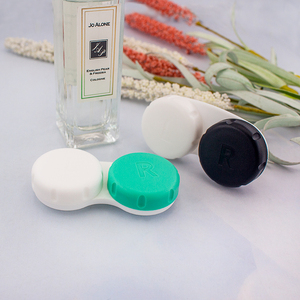
Yes. We specialize in OEM/ODM brand incubation. Our industrial design team assists in creating branded outer boxes, custom blister seals, sterile glass vial crimping, multilingual user manuals, and optical case kits designed around your corporate visual identity.
5. Are plano (0.00 power) and myopic prescription lenses available in the same batch?
Yes. You can consolidate cosmetic non-prescription plano lenses and myopic corrective powers (ranging from -0.50D up to -8.00D in 0.25D/0.50D increments) within single bulk production orders to balance your inventory across cosmetic studios and optometry clinics.
6. What minimum order quantity (MOQ) applies to new brand trials in Ethiopia?
For factory catalog collections ready for shipment, MOQs start from as low as 50–100 pairs across varied designs. For completely custom private label color patterns and personalized bespoke blister packaging, standard production minimums start at 500–1,000 pairs.
Scale Your Contact Lens Distribution in Ethiopia
Connect directly with our engineering and regulatory affairs department. Receive full catalog pricing, EFDA compliance dossier samples, and rapid custom design quotes within 24 hours.
Send an Inquiry