Engineered Optical Solutions Ready for Scaled Distribution
Explore our high-demand OEM/ODM color contact lens models, cosplay theatrical lenses, precision cleaner devices, and customized secondary packaging calibrated for Massachusetts consumer demand.
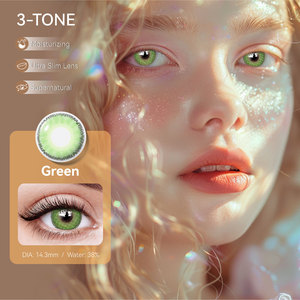
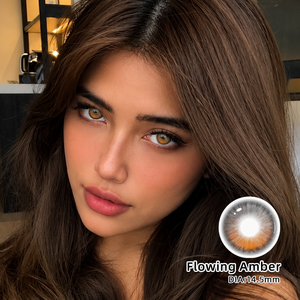
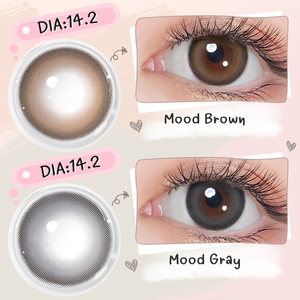
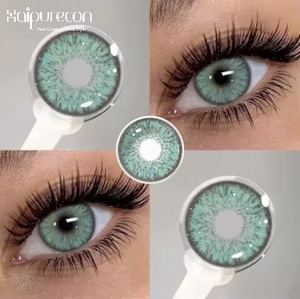
Strategic ODM Contact Lens Manufacturing for the Boston Ophthalmic & Beauty Ecosystem
The Greater Boston metropolitan area, anchored by world-class medical institutions in the Longwood Medical Area, premier academic centers across Cambridge, and an expanding consumer direct-to-consumer (DTC) wellness sector, demands uncompromising optical precision and rigorous regulatory compliance in contact lens production. Sourcing contact lenses via an Original Design Manufacturer (ODM) requires an intimate understanding of advanced polymer chemistry, micro-cast molding automation, and complex US FDA regulatory expectations under 21 CFR 886.
As a vertically integrated contract manufacturing powerhouse, Chroma Lens bridges the gap between Asian high-precision casting efficiency and North American commercial distribution standards. Boston optical chains, indie beauty labels along Newbury Street, and regional e-commerce incubators across Route 128 require more than simple off-the-shelf catalog products. They necessitate customized base curves, optimized oxygen transmissibility (Dk/t), proprietary dot-matrix pigmentation technology, and absolute batch traceability. This comprehensive guide outlines the industrial technologies, localized application contexts, regulatory workflows, and procurement dynamics governing soft colored and corrective contact lens manufacturing for brands targeting the New England corridor.
Vertically Integrated Factory Strengths: Engineering the Critical Steps In-House
A core differentiator in modern hydrogel contact lens fabrication is the internal control of core manufacturing assets. Many intermediary sourcing entities rely on subcontracted tooling and commercial generic inks, leading to batch variance, pigment leaching hazards, and edge contour inconsistencies. Our industrial complex operates under strict ISO 13485:2016 and CE medical device directives, deploying four pillar competencies:
Proprietary Mold Tooling
We engineer micro-precision steel and copper master pins internally. This direct optical mold machining ensures sagittal depth consistency, uniform center thickness (CT down to 0.06mm), and smooth edge profiles that minimize conjunctival friction.
Proprietary Bio-Inks
Our pigment formulations use medical-grade, non-reactive colorants synthesized within our laboratory. Resistant to monomer elution and thermal autoclave cycles, our inks deliver vibrant, high-definition cosmetic fidelity without destabilizing lens hydration.
Sandwich Color Lock-In
Colorants are embedded hermetically between two hydrogel layers via computerized pad-printing and spin-casting, guaranteeing 0% direct contact with corneal tissue or tear film lipids to ensure zero irritation.
By owning every phase—from CAD mold engineering and macromolecular monomer formulation (HEMA, NVP, EGDMA cross-linkers) to automated high-speed cast molding, wet demolding, extraction, saline equilibration, and individual blister high-pressure steam sterilization—we supply Boston importers with rigorous lot-by-lot consistency.
Engineering Matrix: Optical Material Properties & Manufacturing Tolerances
For optometry directors, optical distributors, and high-end brand procurement specialists across Massachusetts, precision physical parameters are non-negotiable. Below is the technical specification matrix of our ODM soft contact lens production lines:
| Physical / Optical Parameter | Standard Poly-HEMA Series | Silicone Hydrogel (SiHy) Series | Inspection Protocol & Tolerances |
|---|---|---|---|
| Water Content Equilibrium | 38% – 42% (High Dimensional Stability) | 45% – 55% (High Wetting Modulus) | ISO 18369-4 Gravimetric / Refractometric (±1.5%) |
| Oxygen Transmissibility (Dk/t) | 11 – 15 × 10⁻⁹ (Fatt units @ -3.00D) | 80 – 120 × 10⁻⁹ (Extended Wear Ready) | ISO 18369-4 Polarographic Method |
| Base Curve (BC) Available | 8.5mm, 8.6mm, 8.7mm | 8.6mm (Customizable 8.4 – 8.8mm) | Non-contact Optical Coherence / Sagittal Spherometry (±0.05mm) |
| Overall Diameter (DIA) | 14.0mm, 14.2mm, 14.5mm (Cosplay up to 14.8mm) | 14.1mm – 14.3mm | Projection Optical Comparator System (±0.10mm) |
| Center Thickness (CT @ -3.00D) | 0.07mm – 0.08mm | 0.06mm – 0.08mm | Low-force Electronic Micrometer Gauge (±0.005mm) |
| Power Range Availability | Plano (0.00D) to -10.00D (0.25D / 0.50D steps) | Plano (0.00D) to -12.00D; Astigmatic Toric | Automated Lensmeter ISO 18369-3 Verification |
| Bio-Encapsulation Technology | Color-Lock Micro-Sandwich Double Embedding | Internal Interpenetrating Polymer Matrix (IPN) | Cotton Swab / Solvent Rubbing & Leachability Assays |
| Sterility Assurance Level (SAL) | SAL 10⁻⁶ (Moist Heat Terminal Autoclave) | SAL 10⁻⁶ (121°C Steam Cycle, 20+ min) | Biological Indicator Validation (Bacillus stearothermophilus) |
Localized Market Applications: Aligning Production with Greater Boston Demographics
The consumer optics market in Boston and surrounding Middlesex, Suffolk, and Norfolk counties displays distinct demographic segments unlike any other metropolitan zone in the United States. Our ODM factory lines provide specialized adaptations tailored to these local ecosystems:
University & Anime Event Circuit
Home to over 250,000 university students across Boston University, Northeastern, Harvard, and MIT, alongside major cultural events like Anime Boston and Fan Expo Boston, demand for vibrant cosplay lenses (14.5mm opaque, mesh, sclera effects) peaks bi-annually. Our rapid-batch ODM service empowers New England specialty retailers to capitalize on high-margin convention surges with certified safe, non-prescription and prescription cosplay styles.
Back Bay & Seaport Cosmetic Lines
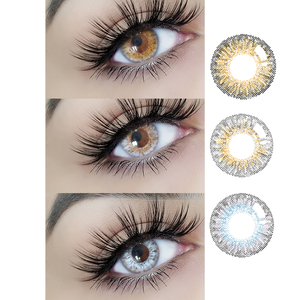
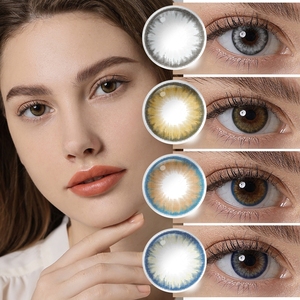
Upscale beauty boutiques and prestige retail salons along Newbury Street and the Boston Seaport emphasize understated, organic iris enhancement. We formulate multi-tone gradient designs featuring subtle hazel, ash grey, and almond tones with delicate limbal rings that blend naturally over darker and lighter irises, packaged in minimalist luxury cartons engineered for premium retail markup.
Longwood & Metro-West Eye Clinics
Surrounding Boston’s world-renowned ophthalmic research institutions and suburban private practices in Newton and Waltham, optometrists require reliable clear diagnostic and corrective soft lenses. We provide contract production of clear hydrogel spherical lenses with validated edge beveling and consistent wettability, perfect for independent clinic brand white-labeling.
Macro Trends & Compliance Protocols in Massachusetts Ophthalmic Procurement
Navigating the contact lens space in the United States necessitates strict adherence to federal and state health regulations. In Massachusetts, contact lenses—whether corrective or purely cosmetic/plano—are categorized as Class II medical devices under the regulatory purview of the US Food and Drug Administration (FDA) and require valid prescription release under the Fairness to Contact Lens Consumers Act (FCLCA). Brands operating in Boston must partner with an ODM factory capable of providing rigorous documentation:
1. Cleanroom Manufacturing & ISO 13485 Certification: All lens fabrication takes place in Class 100,000 (ISO Class 8 equivalent) cleanroom environments with continuous airborne particulate monitoring, terminal sterilization validation, and endotoxin testing (LAL assay). This safeguards imported consignments against microbial bioburden risks upon entry through the Port of Boston or Boston Logan International Airport.
2. Trend Toward High-Dk Daily Disposables: The fast-paced professional demographic in downtown Boston’s Financial District and Cambridge tech corridor favors single-use daily disposable lenses due to convenience and ocular hygiene. Our facility supports high-yield automated blister packaging lines operating with medical foil seals and individualized UDI (Unique Device Identifier) barcoding.
3. Eco-Conscious Packaging Initiatives: Aligning with New England's environmental priorities, we offer lightweight secondary packaging, recyclable polypropylene blister shells, and FSC-certified paperboard outer boxes with soy-based ink printing, assisting Boston brands in communicating sustainable brand values to discerning consumers.
Greater Boston Regional Procurement FAQ: Technical & Supply Chain Inquiries
What regulatory documentation does your factory provide for US / Boston market importation?
What are your Minimum Order Quantities (MOQ) for custom private label packaging versus custom lens patterns?
How does the factory guarantee that cosmetic colored lenses will not cause pigment leaching or corneal abrasion?
What are the freight options and lead times for shipping shipments to Massachusetts?
Can you manufacture both cosmetic plano (non-prescription) and corrective diopter powers?
What quality assurance steps are executed prior to batch release?
Step-by-Step Contract Manufacturing Roadmap: From Concept to Boston Distribution
Partnering with our ODM facility offers a transparent, milestone-driven development process engineered to de-risk commercial scaling:
Phase 1: Optical Spec & Design
Definition of target demographic, iris diameter (14.0mm - 14.5mm), base curve (8.5mm - 8.7mm), replacement lifecycle (Daily/Monthly/Yearly), and customized pattern artwork proofs.
Phase 2: Tooling & Lab Sampling
In-house mold pin cutting, pigment color-matching trials, wet prototype cast molding, and dispatch of pre-production physical samples to Boston for clinical fit and cosmetic evaluation.
Phase 3: Cleanroom Mass Output
Automated casting, saline hydration extraction, blistering, autoclave sterilization at 121°C, CoA documentation issuance, and climate-controlled export dispatch to Boston hubs.
Whether you are an established ophthalmic distributor seeking a more dependable Tier-1 production partner, or a high-growth cosmetics company building an exclusive colored contact lens line for the US East Coast market, our dedicated engineering team is ready to analyze your technical brief.
Accelerate Your Contact Lens Line Serving the Boston Market
Consult directly with our ophthalmic engineers and OEM/ODM product specialists. Request sample kits, custom pattern rendering, physical specification sheets, and competitive factory-direct volume pricing.
Send an Inquiry